
ILLINOIS PEST IDENTIFICATION GUIDE
Bed Bugs of Illinois
Bed bugs are small, flat insects that feed on blood and hide close to places where people sleep or rest. They can occur in clean or cluttered homes, hotels, apartments, dormitories and transportation because they spread primarily by hitchhiking on belongings.
This guide covers identification, life stages, behavior, infestation signs, bites, risks, hiding places and common look-alikes.
How to Identify Bed Bugs
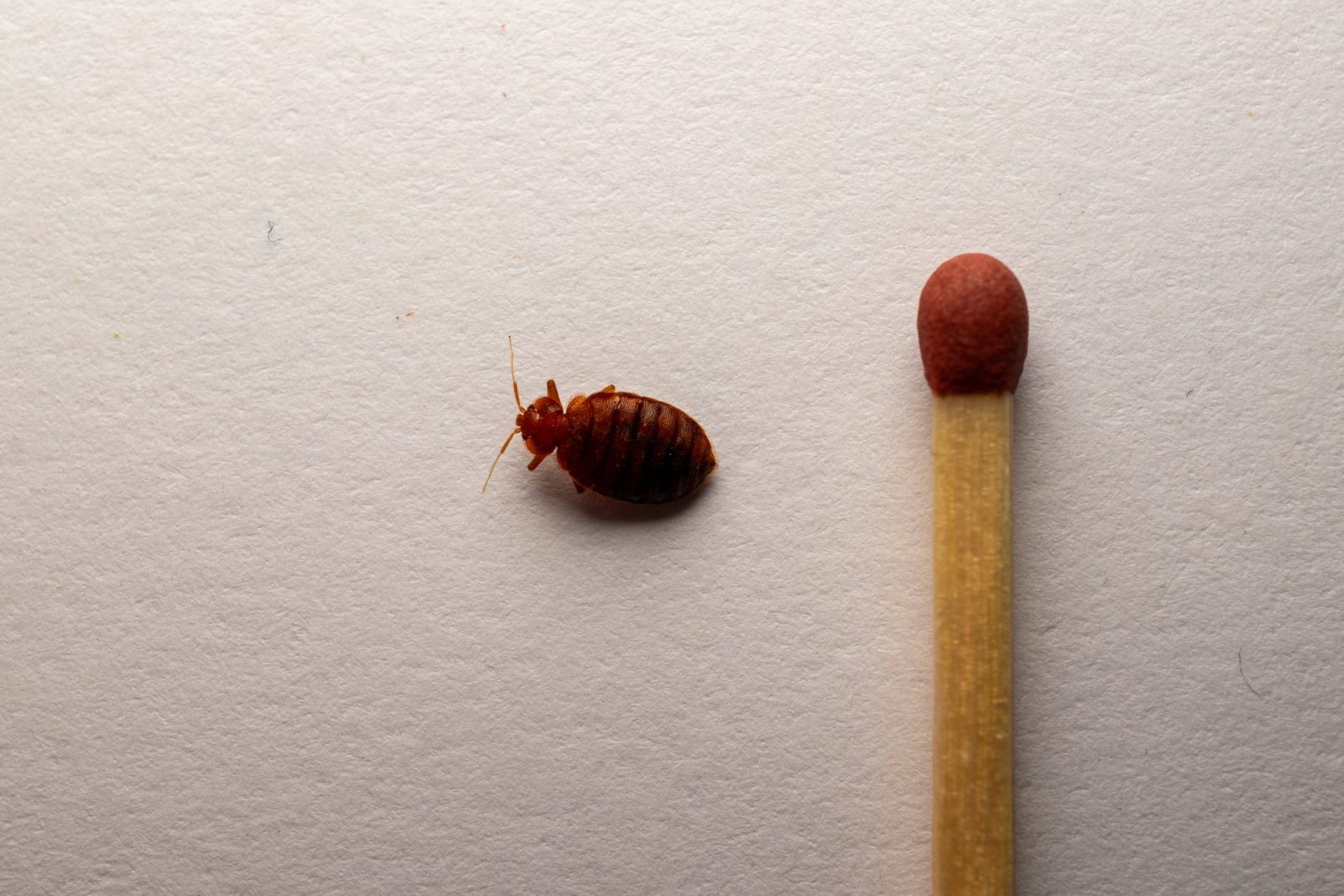
- Adults are approximately one-quarter inch long
- Broad, oval and very flat when unfed
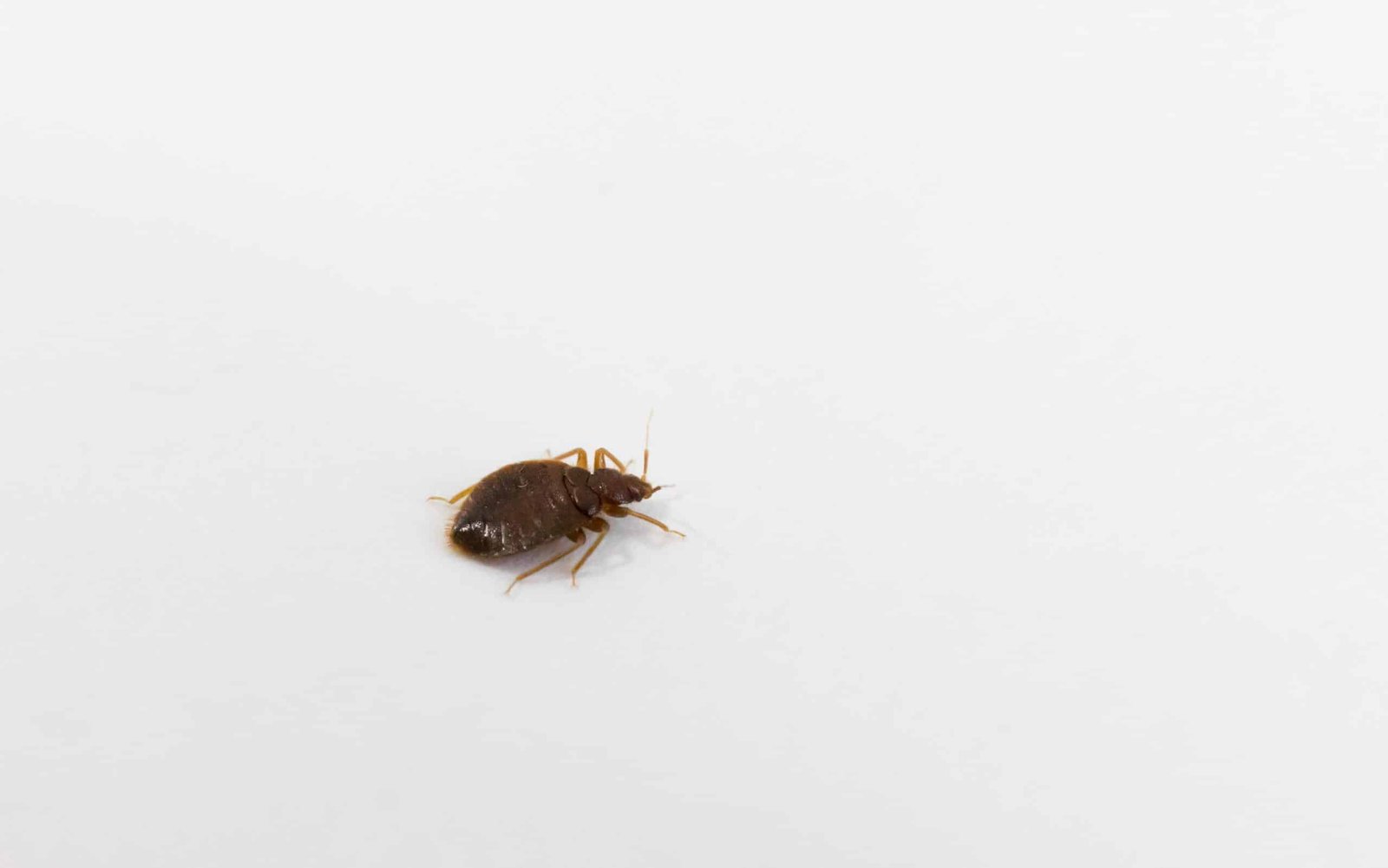
- Reddish brown, becoming darker and more elongated after feeding
- Wingless, with six legs and short golden body hairs
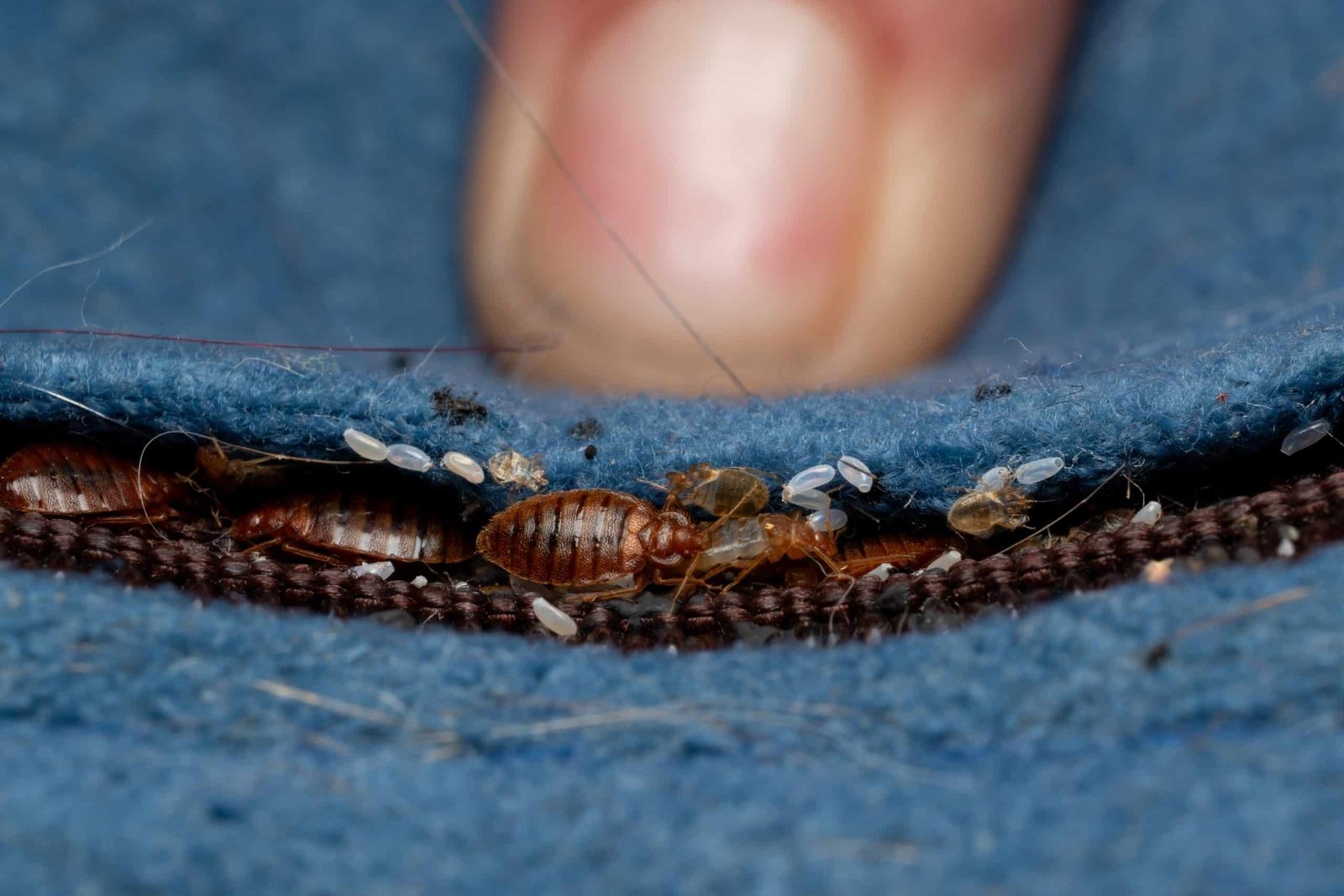
- Nymphs are smaller and paler, sometimes nearly translucent before feeding
- Eggs are pearly white, about one millimeter long and attached in hidden areas
The common bed bug is Cimex lectularius. Its flat body allows it to fit into extremely narrow seams and cracks.
Bed Bug Life Cycle
Bed bugs develop from egg to nymph to adult. Nymphs pass through five growth stages and require a blood meal before each molt. Under favorable indoor conditions, eggs may hatch in roughly one to two weeks.
Adults and nymphs can survive extended periods between meals, especially at cooler temperatures. This ability makes vacancy alone an unreliable way to eliminate an infestation.
Signs of a Bed Bug Infestation
- Live bed bugs in mattress seams, furniture joints or nearby cracks
- Tiny pale eggs or empty eggshells
- Shed nymphal skins
- Dark fecal spotting that may bleed into fabric
- Rust-colored blood stains on sheets or mattresses
- A sweet, musty odor during heavier infestations
Bites can support suspicion, but skin reactions alone cannot confirm bed bugs.
Where Bed Bugs Hide
Early infestations are usually concentrated near beds, couches or chairs where people remain still for long periods. Common harborages include mattress piping, box springs, headboards, bed frames, nightstands and upholstered seams.
As populations grow, bugs may spread behind baseboards, pictures, outlet covers, wallpaper, trim, luggage and belongings in nearby rooms.
Bed Bug Bites and Health Concerns
People react differently to bed bug bites. Some develop itchy red marks, while others show little or no visible reaction. Marks may appear in clusters, lines or irregular patterns, but appearance is not specific enough to identify the pest.
Bed bugs are not known to spread diseases to people. Bites may still contribute to itching, loss of sleep, anxiety, allergic reactions and secondary skin infection caused by scratching. Learn more from the CDC’s bed bug information.
How Bed Bugs Spread
Bed bugs do not fly or jump. They spread by crawling and by hiding in luggage, backpacks, clothing, bedding, used furniture and other transported items.
In apartments, hotels and connected buildings, they may also move through wall openings, hallways or shared utility routes.
Bed Bug Prevention Tips
- Inspect hotel beds and keep luggage away from beds and upholstered furniture
- Check used furniture carefully before bringing it indoors
- Dry travel clothing on an appropriate high-heat setting when practical
- Use light-colored mattress and box-spring encasements to simplify inspection
- Report suspected activity promptly in multi-unit housing
Bed Bug Look-Alikes & FAQs
Carpet beetle larvae, bat bugs, fleas, cockroach nymphs, booklice and small ticks are sometimes mistaken for bed bugs. A clear photograph or captured specimen can make professional identification easier.
Are bed bugs caused by poor housekeeping?
Can bed bugs fly or jump?
Can I eliminate bed bugs by turning up the heat?
Found a suspected bed bug or infestation signs? See how D&K inspects and treats hidden activity on our Bed Bug Control Services page.