
ILLINOIS PEST IDENTIFICATION GUIDE
Silverfish of Illinois
Silverfish are small, wingless insects recognized by their tapered bodies, metallic scales and three tail-like filaments. They favor protected spaces with humidity and can survive on paper, adhesives, starches and many other household materials.
This guide explains silverfish identification, habits, diet, life cycle, damage and the signs Illinois homeowners commonly notice.
How to Identify Silverfish
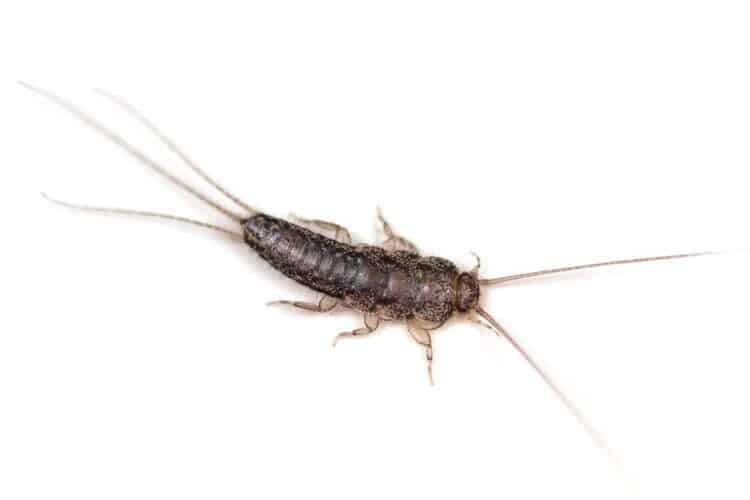
- About one-half to three-quarters of an inch long, not including their antennae and tail filaments
- Flattened, carrot-shaped body that narrows toward the rear
- Silvery gray scales and a metallic appearance
- Long antennae and three bristle-like appendages at the tail
- Quick, wriggling movement and no wings
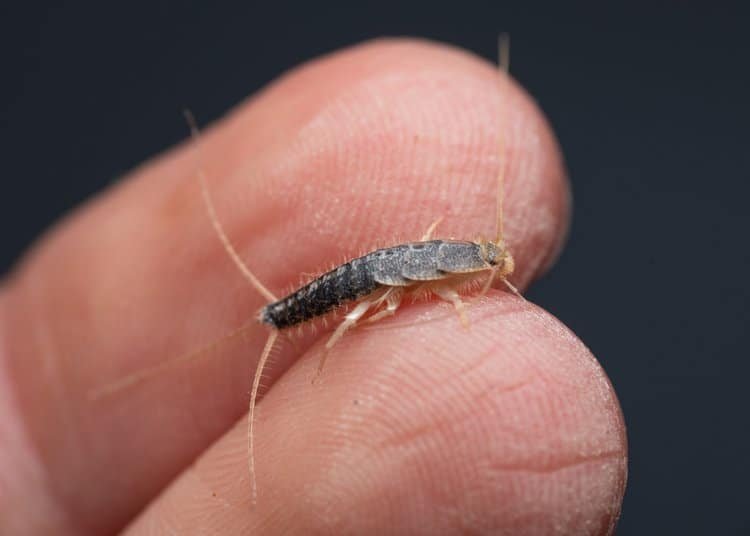
Young silverfish resemble smaller adults. Their scales develop as they mature, so early stages may appear lighter or less metallic.
Silverfish, Four-Lined Silverfish & Firebrats
Common Silverfish
Lepisma saccharinum
Usually silvery gray with a smooth metallic look. Common silverfish favor humid, protected areas and are frequently noticed in bathrooms, basements and storage spaces.
Four-Lined Silverfish
Ctenolepisma lineata
Often larger and more mottled than the common silverfish, with dark longitudinal markings. This species tolerates somewhat drier conditions and may occur in attics and upper levels.
Firebrat
Thermobia domestica
A mottled gray-brown relative that prefers unusually warm locations. Firebrats may be associated with furnace rooms, boilers, hot pipes, commercial kitchens and other heated spaces.
Where Silverfish Live
Silverfish are primarily active at night. During the day they shelter in cracks, wall voids, behind baseboards, beneath insulation and inside stored materials.
Bathrooms, basements, laundry rooms and crawl spaces often provide favorable humidity. Some related species can also live in attics, closets, offices, libraries and other areas containing paper or cardboard.
What Silverfish Eat
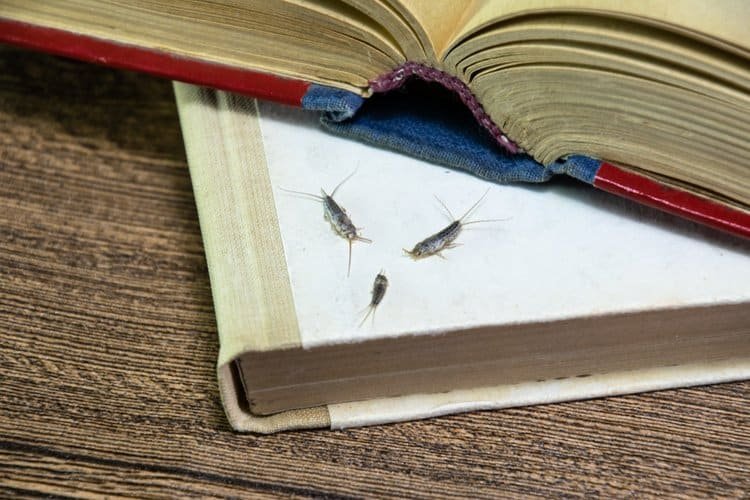
Silverfish feed on carbohydrates and proteins from many sources. Their diet can include book bindings, wallpaper paste, paper, cardboard, cereals, flour, starch, glue, dead insects and natural fibers.
They can survive for long periods with very little food, which helps hidden populations persist even in clean homes.
Silverfish Life Cycle
Silverfish undergo gradual development. Females place tiny eggs inside protected cracks, and the young hatch as miniature versions of adults. They molt repeatedly as they grow and may continue molting after reaching maturity.
Development is slow compared with many household insects, but adults can live for several years when temperature, humidity and food are favorable.
Damage and Health Risks
Silverfish do not bite people, spread known diseases or damage structural wood. Their main concern is nuisance activity and feeding damage to valued materials.
Damage may appear as irregular scraping, holes, yellow staining or surface loss on books, papers, wallpaper, photographs, cardboard and some fabrics.
Signs of Silverfish Activity
- Fast-moving silver insects seen at night or when boxes are disturbed
- Small holes, notches or scraped surfaces on paper products
- Yellow stains, scales or pepper-like droppings near damaged materials
- Shed skins in storage areas, closets or along baseboards
- Repeated sightings in humid rooms
Reducing humidity, repairing leaks, improving ventilation, sealing gaps and moving papers or cardboard into sealed containers can make a structure less favorable.
Frequently Asked Questions
Are silverfish harmful to people?
Does seeing silverfish mean my home has a moisture problem?
Are silverfish the same as earwigs?
Finding silverfish or damage to stored materials? See how D&K inspects and treats hidden activity on our Silverfish Control Services page.