Bats of Illinois
Learn how Illinois bats live, what they eat, which species people encounter most often and what to do when a bat turns up inside a home.
The only mammals capable of true flight
Bats are not blind, aggressive or looking to nest in people’s hair. They are specialized insect predators that use both eyesight and echolocation to navigate after dark.
Every bat species found in Illinois feeds on insects. By hunting moths, beetles, flies and other night-flying insects, bats contribute to healthy ecosystems and agricultural pest suppression. Some spend summer days beneath loose bark or among leaves. Others use caves, bridges, barns, attics and narrow building gaps as sheltered roosts.
Illinois bats either migrate, hibernate or adjust their activity to survive the winter when insects are scarce. Females generally form maternity colonies in spring and early summer, give birth to live young and nurse them until the pups can fly and hunt on their own.
Which bats are most likely to be seen?
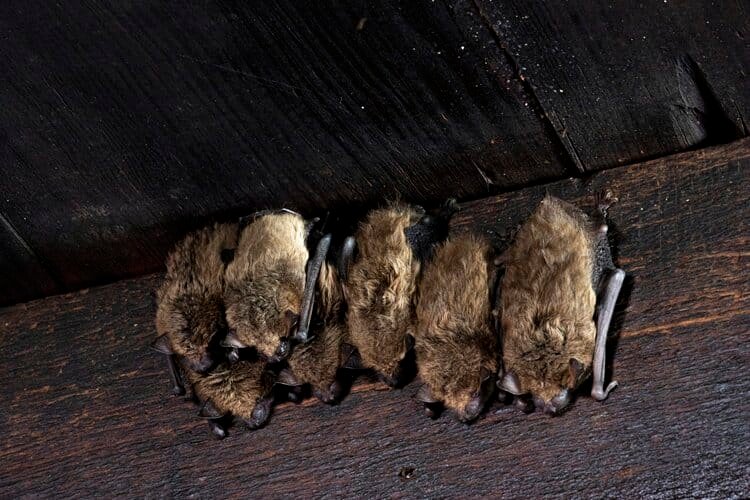
Illinois recognizes 13 species. The Illinois Department of Public Health identifies the big brown, little brown, eastern red and silver-haired bat as the species people encounter most often.
Big brown bat
A sturdy, dark-brown bat found statewide. Big brown bats tolerate cold better than many species and commonly use buildings, barns, tree cavities and caves. Females form maternity colonies, and the young begin flying during summer.
Little brown bat
A small brown bat historically associated with large maternity colonies in warm attics, barns and other structures. It also hibernates in caves and mines and has been heavily affected by white-nose syndrome.
Eastern red bat
A reddish, heavily furred bat that usually roosts alone in tree foliage. Its coloring helps it resemble a dead leaf. Eastern red bats migrate and are more likely to be encountered outdoors than as an attic colony.
Silver-haired bat
Named for pale-tipped fur that gives it a frosted appearance. Silver-haired bats usually roost in tree cavities or beneath bark and migrate through the region, but individuals may occasionally enter buildings.
Species reference: Illinois Department of Natural Resources—Wild About Illinois Bats.
How Illinois bats live
Echolocation
Bats emit high-frequency sounds and interpret returning echoes to judge an object’s distance, shape, texture and movement. Their eyes also work; echolocation simply provides extraordinary short-range detail in darkness.
Roosting
A roost is a resting place—not a nest. Depending on the species and season, bats may roost under bark, in foliage, caves, bridges, attics, soffits or wall gaps.
Maternity colonies
Females gather in warm summer roosts to give birth and raise pups. Young bats initially cling to their mothers or remain at the roost while adults feed, then begin flying several weeks later.
Food
Illinois bats eat insects. Different species hunt around tree canopies, over water, along forest edges or in open air, reducing many night-flying insect populations.
Winter survival
When insects disappear, some bats migrate while others hibernate in places with stable temperatures and humidity. Disturbing a hibernating bat can force it to use limited fat reserves.
Conservation
Habitat loss, disturbance, wind turbines and white-nose syndrome have reduced many populations. Six Illinois species are listed as threatened or endangered.
Why an attic can become a roost
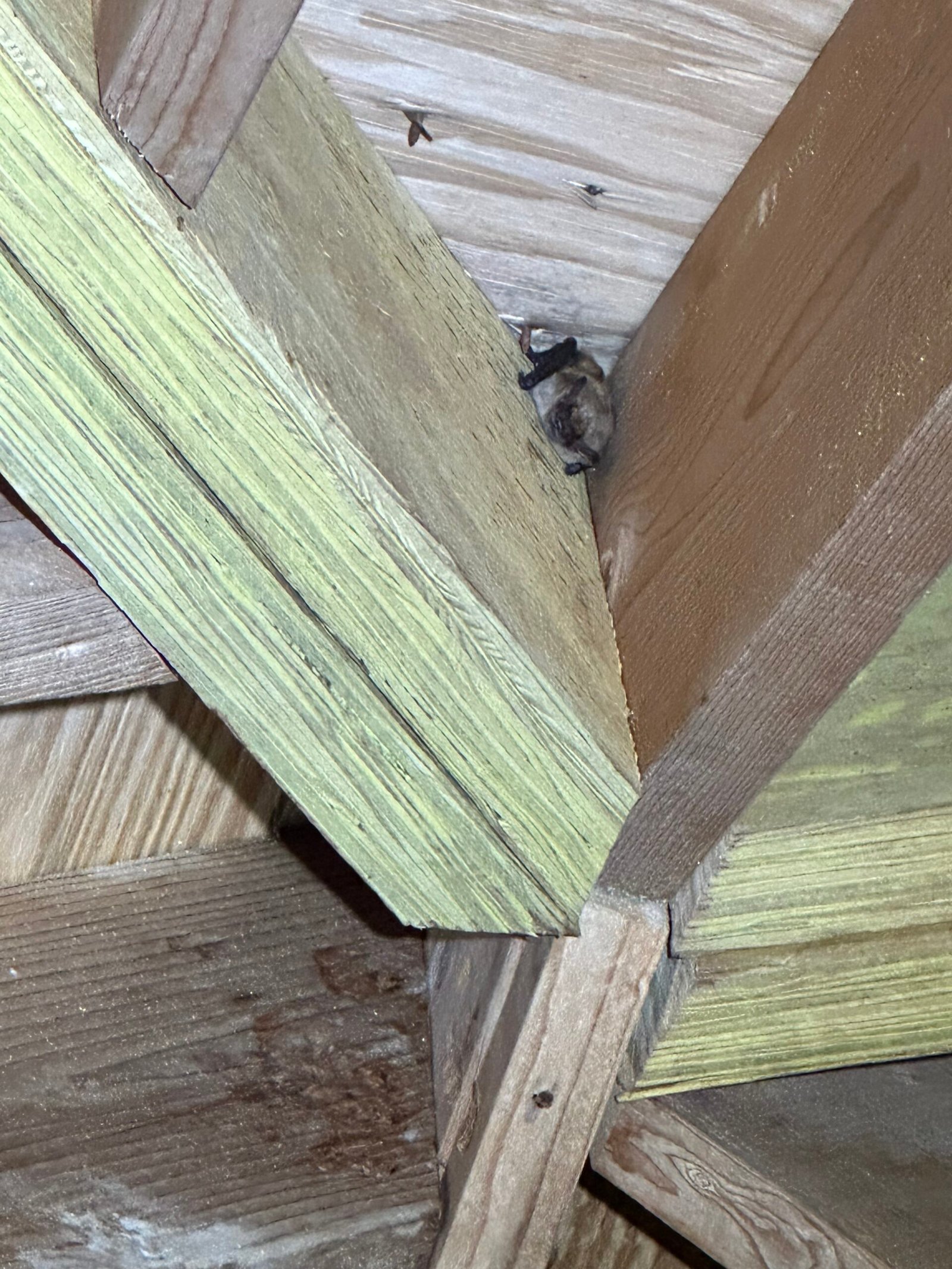
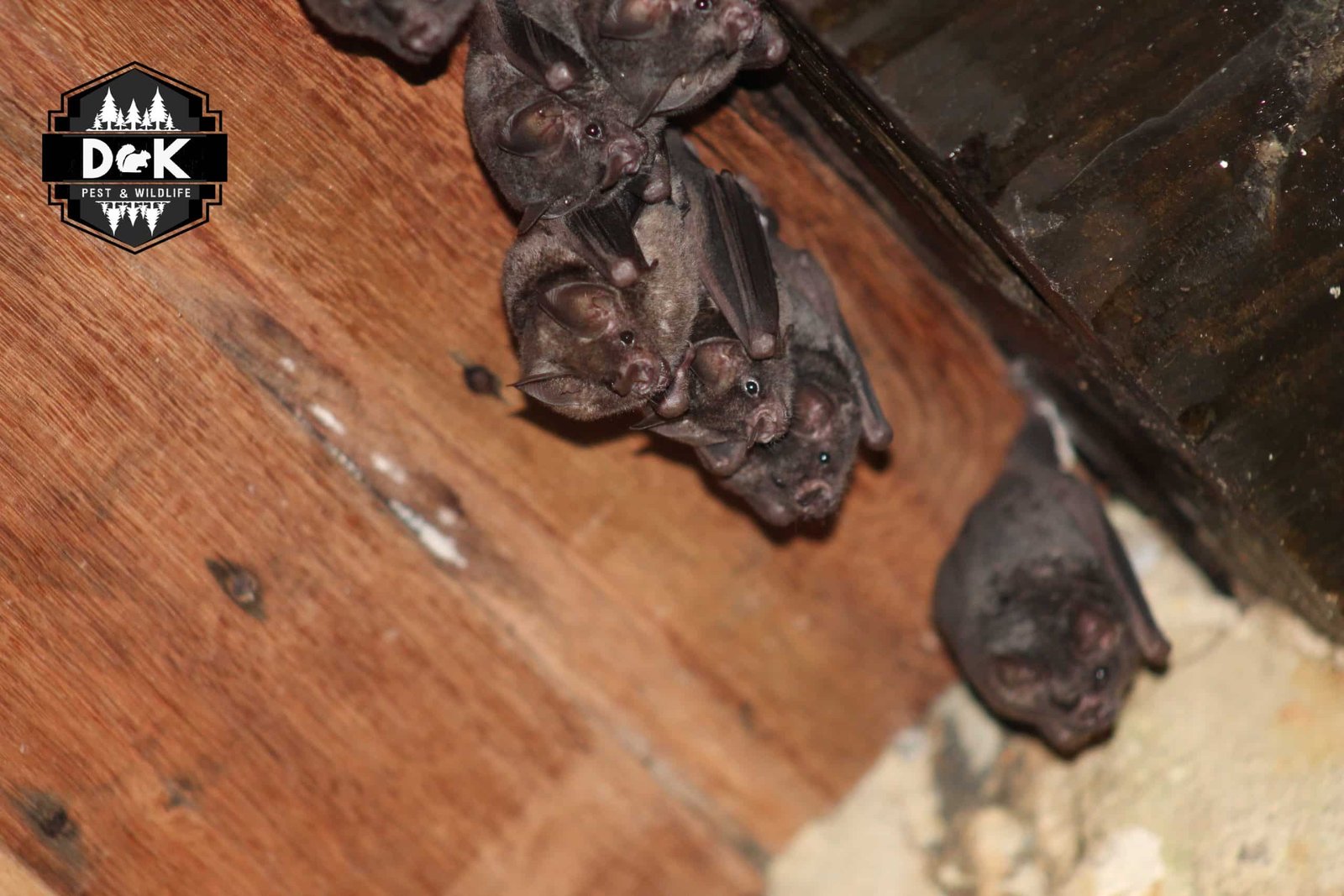
Bats do not chew holes like rodents. They take advantage of existing construction gaps along roof edges, fascia, soffits, ridge vents, chimneys, flashing and utility penetrations. Openings greater than about one-quarter inch may be usable.
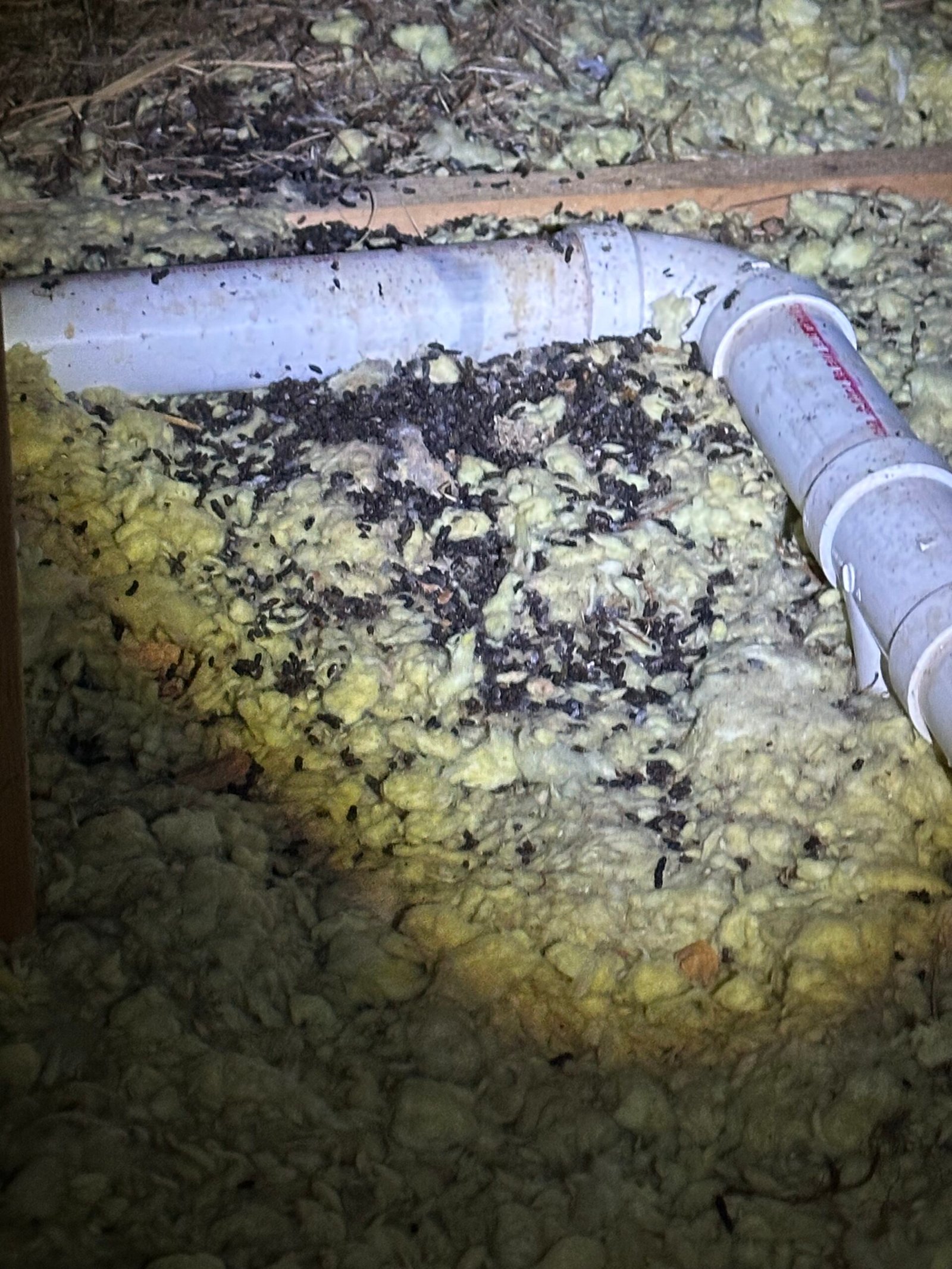
- Guano accumulating below a roofline opening or on attic insulation
- Dark rub marks where fur repeatedly contacts an entry gap
- Chirping or scratching near dusk or before dawn
- Bats consistently emerging from the same roof area
- An occasional bat reaching a bedroom or other living space
If a colony is present, simply closing the active opening can trap bats inside or force them into the home. A professional bat removal and exclusion plan seals secondary gaps, installs a one-way exit during the legal season and closes the primary route after the colony leaves.
Rabies, droppings and sensible precautions
Possible bat contact requires public-health guidance
Do not touch a bat with bare hands. If a bat was in a room with a sleeping person, unattended child, intoxicated person, cognitively impaired person or anyone who cannot confidently rule out contact, contact your city or county health department. Do not release the bat until the possible exposure is evaluated.
Rabies: Most bats are not infected, but the virus cannot be diagnosed by appearance alone and tiny bite marks may be difficult to see. Wash any contact area with soap and water and seek prompt medical/public-health advice.
Histoplasmosis: This lung infection is caused by breathing in spores from an environmental fungus. The fungus can occur in soil or material enriched by bird or bat droppings, especially when contaminated material is disturbed. Not every pile of guano contains the fungus, but larger accumulations should be cleaned with appropriate controls and protective equipment.
Official guidance: Illinois rabies information · CDC histoplasmosis causes
Why bat work is seasonal in Illinois
All Illinois bats are protected under the Wildlife Code. A bat can be removed from an actively used living space at any time, but permanent eviction of a colony from an attic or other non-living area is restricted to protect flightless pups and bats that cannot safely leave.
Illinois permits permanent exclusion from March 15 through May 15 and August 5 through October 30 when the outdoor temperature is above 50°F at dusk.
Outside those windows, a company can inspect, identify openings and plan repairs, but should not permanently evict the colony from the non-living roost. These dates are one reason early inspection and accurate species/roost assessment matter.
Seasonal rule: Illinois Department of Public Health Bat Encounters Fact Sheet.
Use the right page for the next step
This library explains Illinois bat biology and safety. If bats are entering your home, our service page explains D&K’s inspection, humane one-way exclusion, structural repairs and guano cleanup process.