
American Beavers of Illinois
The American beaver is Illinois’ largest rodent and one of its most influential wetland animals. Learn how to identify beavers, understand their dams and lodges, and recognize the signs that activity is affecting property.
Illinois’ largest rodent
An adult American beaver may reach about three feet in length and weigh as much as 60 pounds. Its waterproof brown coat, webbed hind feet, orange incisors, and broad, nearly hairless paddle-shaped tail are adapted for swimming and working around water.
While swimming, a beaver often keeps its head above the surface and may slap the water with its tail as an alarm signal. On land, its size and heavy body clearly distinguish it from the much smaller muskrat.
Where beavers live in Illinois
Beavers are common statewide and occupy streams, rivers, ponds, lakes, drainage ditches, canals, marshes, and backwaters where water and woody vegetation are available.
Lodges
Dome-shaped lodges are constructed from limbs, sticks, and mud. Underwater entrances lead to a dry living chamber above the waterline.
Bank dens
Beavers may also dig resting and nesting chambers into a shoreline bank, with entrances positioned below the water.
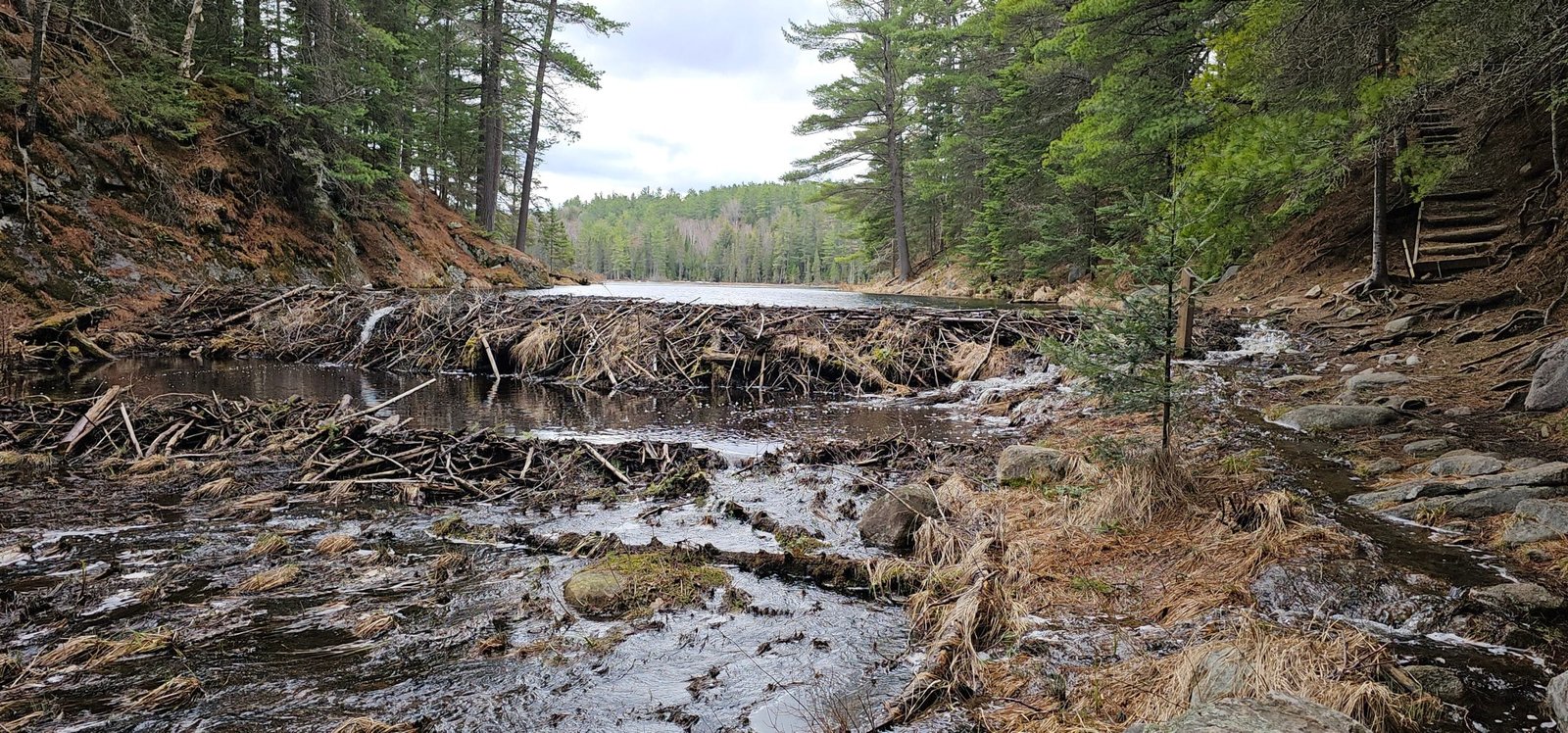
Dams
Dams slow moving water and help maintain enough depth to protect underwater entrances and provide safer access to food and shelter.
What beavers eat
Woody plants
Beavers eat bark, twigs, and leaves from trees and shrubs. They cut stems with their large incisors and may carry branches back to a lodge, den, or underwater food cache.
Aquatic vegetation
Duckweeds, water lilies, grasses, and other aquatic plants also contribute to the diet. Beavers do not eat wood itself; they consume the nutritious bark and growing tissues.
How to recognize active beavers
Gnawed trees
Fresh pale wood, large tooth grooves, bark stripping, pointed stumps, and nearby wood chips are distinctive feeding and cutting signs.
Slides and tracks
Broad, muddy slides connect feeding areas to water. Large webbed hind-foot tracks and a tail drag may be visible in soft mud.
Changing water levels
New sticks and mud across a culvert or channel, expanding flooded ground, and slowed drainage may indicate an actively maintained dam.
Compare two common aquatic rodents
Beaver clues
- Large body, sometimes up to about 60 pounds
- Broad, flat paddle-shaped tail
- Cut or girdled trees and large wood chips
- Dams, lodges, broad slides, and large bank dens
Muskrat clues
- Much smaller, usually only a few pounds
- Long, narrow tail flattened from side to side
- Clipped aquatic plants and small feeding platforms
- Small bank holes, narrow slides, or vegetation houses
Colonies, kits, and seasonal activity
Beavers usually live as family groups. Several animals may share a lodge, while bank dens often hold fewer individuals. Mating commonly occurs in January or February in Illinois, with young generally born in May or June.
Young beavers
A litter typically contains three or four kits. They are born furred and remain with the family while learning to swim, feed, and maintain the home site.
Year-round residents
Beavers remain active through winter. They may store branches underwater near their lodge or den so food remains accessible beneath ice.
Benefits and conflicts can exist together
Wetland creation
Beaver dams can create valuable habitat for fish, amphibians, waterfowl, insects, and wetland plants. They also slow water and trap sediment.
Property conflicts
The same activity can flood roads or yards, block drainage structures, damage valued trees, undermine banks, and interfere with pond or stream management.
Illinois reference: Illinois Department of Natural Resources—American beaver. Property-damage reference: Internet Center for Wildlife Damage Management.
Need help with active beaver damage?
D&K provides inspection-led beaver trapping and removal for property owners dealing with dams, flooding, tree damage, and bank activity.