ILLINOIS PEST IDENTIFICATION GUIDE
Crickets of Illinois
Crickets are jumping insects with long antennae and powerful hind legs. Illinois homes may encounter house crickets, field crickets and camel crickets, each with different habits and preferred hiding places.
This guide covers identification, sounds, diet, life cycle, risks, habitat and common infestation signs.
Common Crickets Found Around Illinois Homes
House Cricket
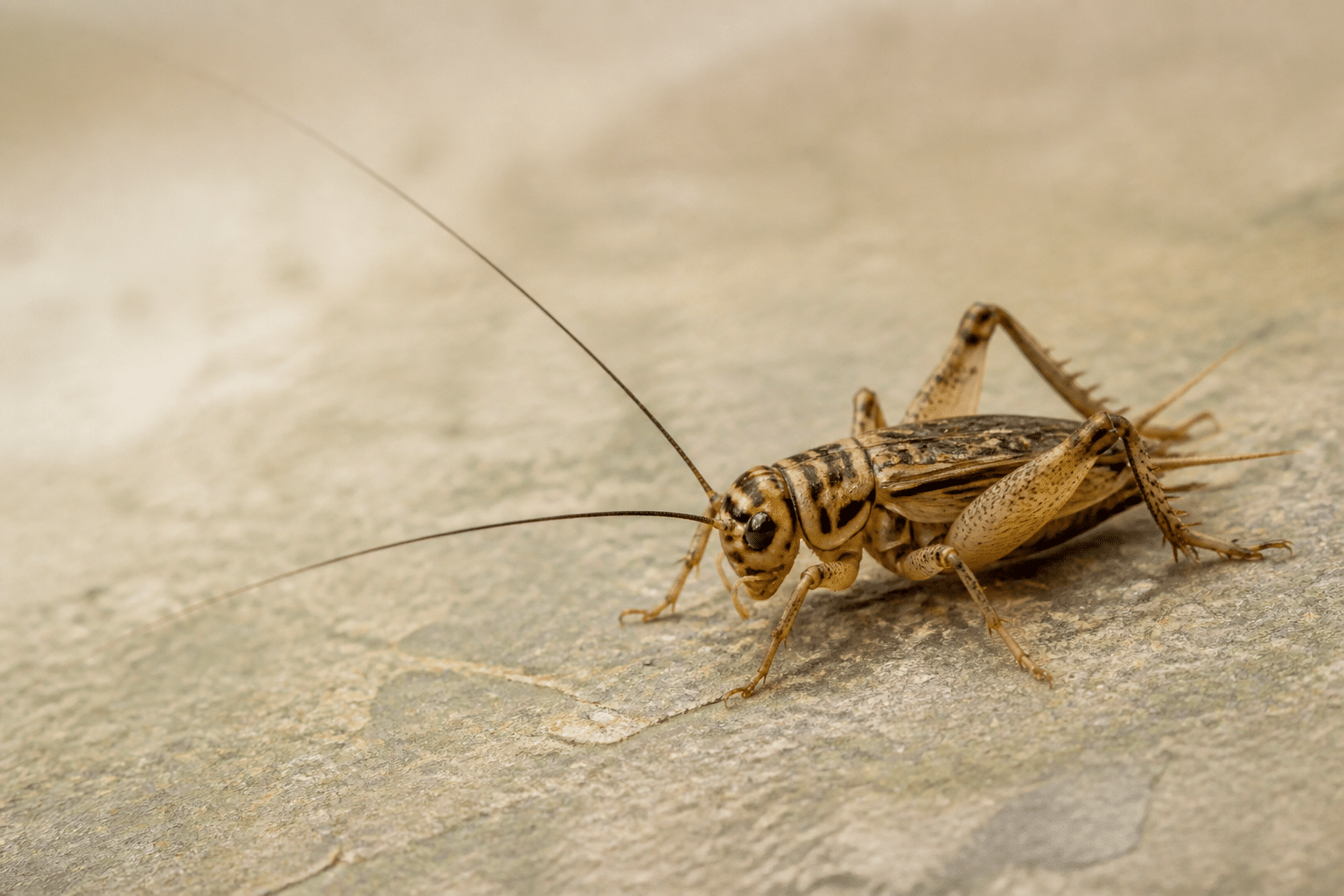
Tan to light brown with three dark bands across the head. House crickets may reproduce indoors around warmth, food and moisture.
- Common areas: basements, kitchens, utility rooms
- Sound: loud repeated chirping
Field Cricket
Usually dark brown or black and more robust than a house cricket. Field crickets live outdoors but commonly wander into buildings.
- Common areas: lawns, foundations, garages
- Sound: strong chirping, often seasonal
Camel Cricket
Humpbacked, wingless crickets with extremely long legs and antennae. They favor cool, damp environments and do not chirp.
- Common areas: crawl spaces, basements, wells
- Key trait: high, sudden jumps
Cricket Diet and Habits
Crickets are mostly nocturnal. Many species feed on plant material, dead insects, fungi and organic debris. Indoors, house crickets may also chew paper, fabrics, food residue and stored products.
Male house and field crickets chirp by rubbing specialized areas of their wings together. Temperature influences the rate of chirping.
Cricket Life Cycle
Crickets develop from egg to nymph to adult. Nymphs resemble smaller wingless adults and molt repeatedly as they grow.
Field crickets generally complete their life cycle outdoors. House crickets can continue breeding inside warm buildings, while camel crickets rely on dark, humid shelter.
Cricket Signs and Household Risks
- Persistent nighttime chirping inside walls, basements or living spaces
- Live crickets around floor edges, utility areas or garages
- Small dark droppings near hiding places
- Damage to fabrics, paper or stored materials during heavier indoor activity
- Camel crickets jumping from damp, dark storage or crawl-space areas
Crickets do not damage structural wood and are not considered major disease vectors. Their primary concerns are noise, nuisance activity, contamination and occasional damage to household materials.
Frequently Asked Questions
Do all crickets chirp?
Are camel crickets dangerous?
Why do crickets come inside in fall?
Hearing or seeing crickets indoors? Visit our Cricket Control Services page.