
ILLINOIS PEST IDENTIFICATION GUIDE
House Centipedes of Illinois
House centipedes are fast, long-legged predators that commonly appear in basements, bathrooms and other sheltered parts of Illinois homes. Their many legs and sudden movement look alarming, but they spend their time hunting smaller insects.
This guide covers identification, behavior, diet, life cycle, risks, habitat and the difference between centipedes and millipedes.
How to Identify a House Centipede
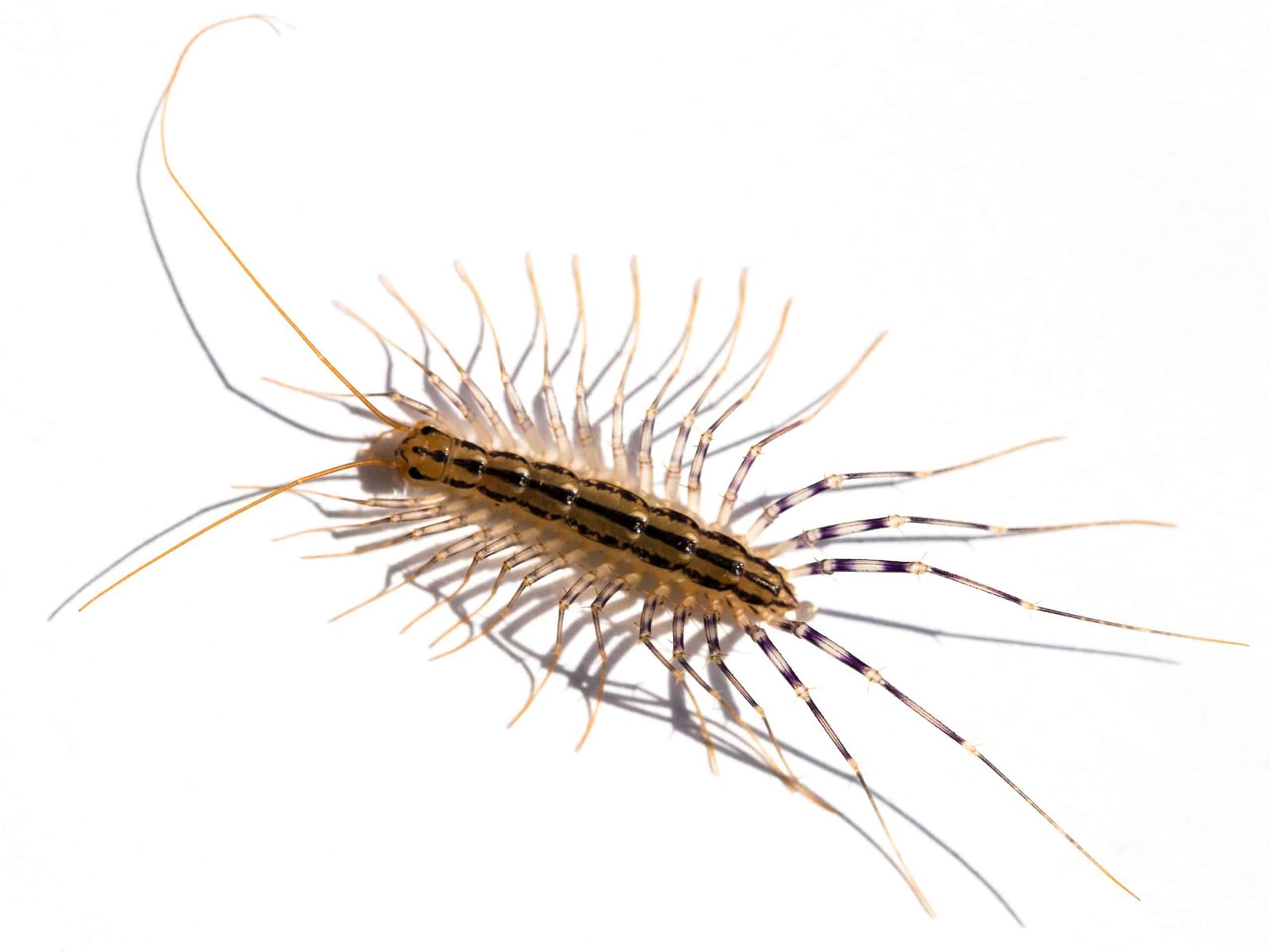
- Adult body roughly one to one-and-one-half inches long, appearing much larger when the legs are included
- Fifteen pairs of extremely long, delicate legs
- Yellowish gray body with three dark longitudinal stripes
- Long antennae and a final pair of legs that can resemble antennae
- Very fast, darting movement across walls and floors
The scientific name of the common house centipede is Scutigera coleoptrata. Young centipedes hatch with fewer legs and add more pairs as they molt.
Where House Centipedes Live
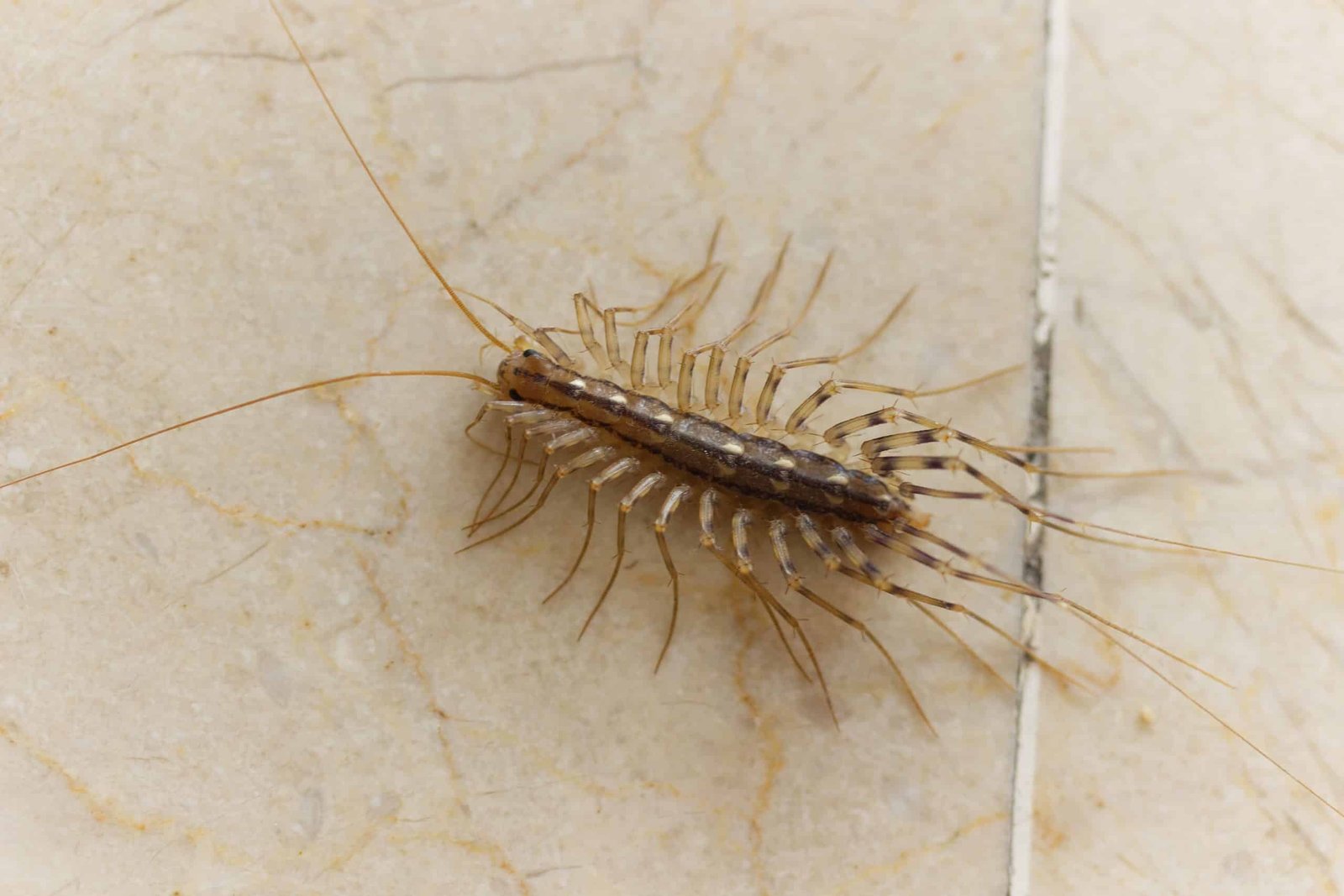
House centipedes need protected areas with access to moisture and prey. Inside, they are commonly found in basements, crawl spaces, bathrooms, laundry rooms, utility rooms, closets and garages.
They hide during the day inside cracks, wall voids and beneath stored items. Most visible hunting occurs at night, when they run across floors or climb walls in search of insects.
What House Centipedes Eat
House centipedes are active predators. Their prey can include silverfish, spiders, cockroaches, crickets, moths, flies and other small arthropods.
They use modified front legs called forcipules to capture prey and deliver venom. This hunting behavior means repeated centipede sightings can be a clue that other insects are present.
Centipedes vs. Millipedes
Centipedes
- One pair of legs per body segment
- Flattened bodies built for fast movement
- Predators that hunt other small animals
- House centipedes have unusually long legs
Millipedes
- Most body segments carry two pairs of legs
- Rounded, cylindrical bodies
- Slow-moving feeders on decaying plant material
- Often curl into a coil when disturbed
House Centipede Life Cycle
Females deposit eggs in protected, moist locations. Newly hatched house centipedes begin with only a few pairs of legs and add additional pairs through successive molts until reaching the adult total of fifteen pairs.
Development can take several years, and adults may live for multiple years when shelter, moisture and prey remain available.
Do House Centipedes Bite?
House centipedes are not aggressive toward people and bites are uncommon. Their first response is usually to run and hide. A bite is possible if one is trapped against bare skin, but most indoor encounters do not result in injury.
They do not damage buildings, furniture or stored food. Their primary concern is nuisance activity and the possibility that prey insects are also living inside.
Other Centipedes Found in Illinois
Illinois also has native stone centipedes and soil centipedes. These species usually live outdoors beneath logs, stones, leaf litter and soil where they hunt small invertebrates.
Stone centipedes are compact, flattened and fast-moving. Soil centipedes are long, narrow and adapted to moving through soil. They may wander indoors accidentally, especially after heavy rain or changes in moisture, but house centipedes are the species most adapted to living inside buildings.
Frequently Asked Questions
Why do house centipedes run so fast?
Does one house centipede mean I have an infestation?
Should I leave house centipedes alone because they eat pests?
Seeing house centipedes repeatedly? See how D&K inspects the moisture, hiding places and prey insects behind the activity on our House Centipede Control Services page.