
Muskrats of Illinois
Muskrats are native, semi-aquatic rodents found throughout Illinois. Learn how to identify them, where they live, what they eat, and why their shoreline burrows can damage private pond embankments.
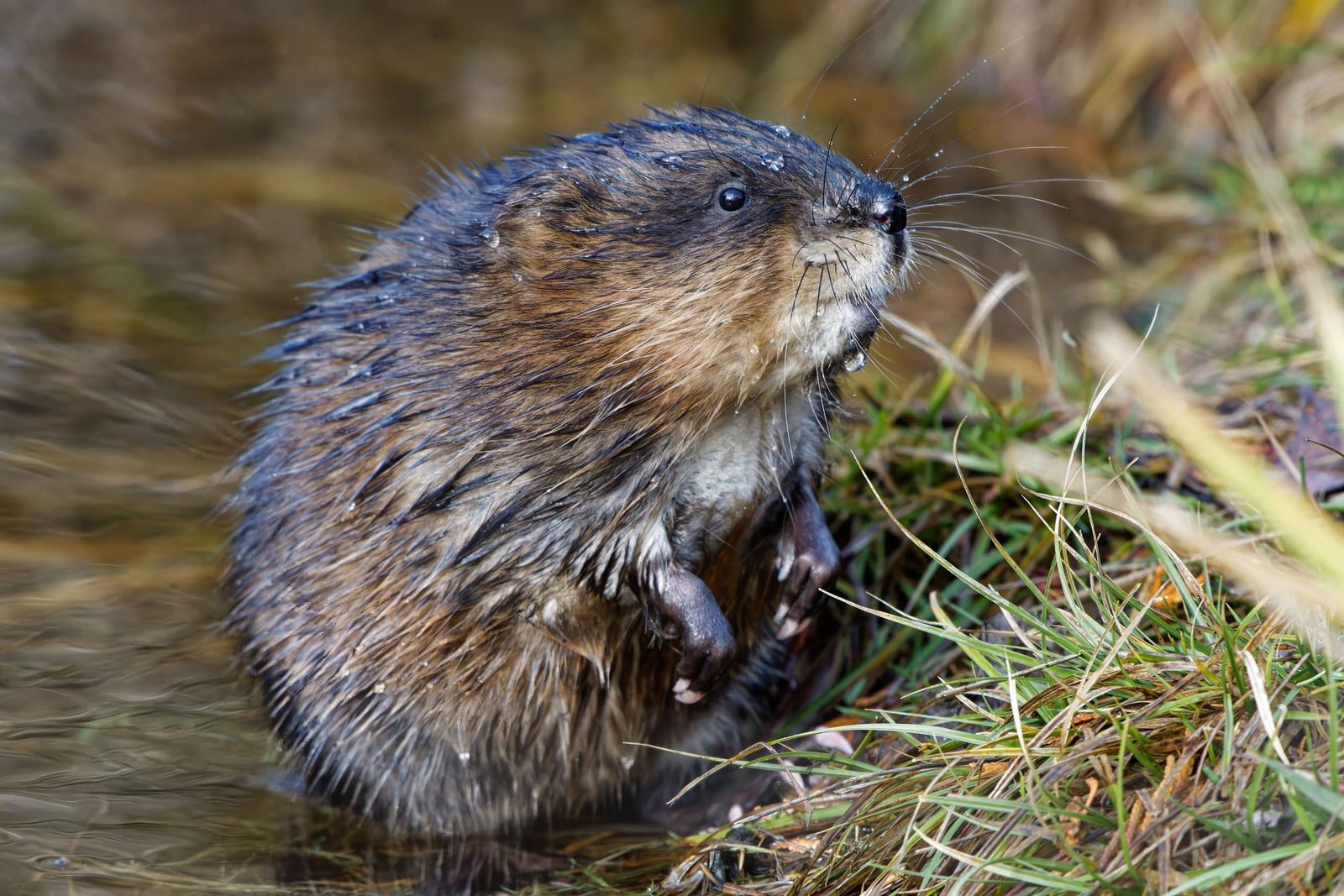
A rodent built for life around water
Adult muskrats have stocky bodies, small ears, brown to reddish-brown fur, long hind feet, and a thick, mostly hairless tail flattened from side to side. That narrow, vertically flattened tail is an important difference from the broad, paddle-shaped tail of a beaver.
The head and body are commonly about 10 to 14 inches long, with an additional tail measuring roughly 8 to 11 inches. When swimming, the nose and small ears may be the only parts visible above the water.
Where Illinois muskrats live
Muskrats occur statewide in ponds, lakes, streams, rivers, drainage ditches, marshes, and other areas with dependable water and aquatic vegetation.
Bank burrows
Many muskrats dig dens into pond or stream banks. Entrances are often below the waterline, while the nesting chamber remains higher inside the bank.
Vegetation houses
In shallow wetlands, muskrats may build rounded houses from cattails and other plants, with an underwater entrance and a dry chamber above water.
Mostly nighttime activity
Muskrats are mainly nocturnal, so property owners often notice slides, tracks, clipped plants, or burrows before seeing the animal itself.
What muskrats eat
Aquatic plants
Cattails, bulrushes, sedges, water lilies, smartweeds, lotus, and other aquatic vegetation make up most of the diet. Cut stems or floating feeding remains may collect near active areas.
Occasional animal foods
Muskrats may also eat crayfish, mussels, and other aquatic animals, but plant material is their primary food source.
How muskrat burrows affect embankments
Hidden tunnels
Bank-burrow entrances may be concealed at or below the waterline. A tunnel can extend well into an embankment before damage becomes visible.
Voids and collapse
Burrowed soil can lose support. The surface may soften, settle, or collapse, especially when saturated or subjected to foot, vehicle, or equipment traffic.
Leaks and erosion
In dams or water-retaining embankments, tunnels can contribute to seepage, washouts, and larger failures if the damage is not evaluated and repaired.
Read the shoreline signs
Muskrat clues
- Smaller body and thin, side-flattened tail
- Narrow slides and small bank openings
- Clipped aquatic plants and small feeding platforms
- No large tree-cutting or dam-building project
Beaver clues
- Much larger body and broad, paddle-shaped tail
- Large lodge, dam, or bank-den activity
- Gnawed or felled trees with chisel-shaped cuts
- Larger slides, tracks, and woody construction material
Reproduction and family groups
Illinois muskrats generally breed in spring and fall, often producing two litters per year. A litter commonly contains about two to eight young. The young develop quickly and may be swimming within several weeks.
Shared den systems
Several muskrats may use the same den, and one shoreline can contain multiple entrances or connected areas of activity.
Productive habitat
Reliable water, protective cover, and abundant aquatic vegetation can support repeated use of the same pond or marsh habitat.
Muskrat facts
Are muskrats rats?
Muskrats are rodents, but they are not the same animals as Norway rats or house mice. They are specialized for aquatic environments and belong to the vole and lemming family.
How long can a bank burrow be?
Illinois Department of Natural Resources notes that a muskrat bank burrow may extend nearly 25 feet, which helps explain why surface damage may not reveal the full underground system.
Are muskrats active all year?
Yes. They remain active through winter and may travel beneath ice between dens and feeding areas.
Should a damaged dam be inspected?
Yes. Trapping can remove active animals, but leaks, sinkholes, settlement, or compromised pond dams should be evaluated separately by a qualified pond or engineering professional.
Illinois reference: Illinois Department of Natural Resources—Muskrat. Pond-management context: University of Illinois Extension.
Need help with muskrats in a private pond?
D&K provides inspection-led muskrat trapping and removal for active shoreline and embankment problems.