Skunks of Illinois
Learn how striped skunks live, what attracts them to neighborhoods, how their spray works and when skunk behavior around a home requires extra caution.
Quiet nighttime foragers
Skunks are not naturally aggressive. They usually move slowly, forage after dark and avoid conflict when given space. Their digging can be frustrating, but their appetite for beetles, grubs, insects, mice and carrion also makes them part of a healthy ecosystem.
The striped skunk is common and native throughout Illinois. It uses forest edges, fields, roadside cover and suburban neighborhoods where food, water and protected den sites are available.
Skunks depend on strong senses of smell and hearing. Their eyesight is comparatively limited, which is one reason sudden close encounters with people or pets can trigger a defensive response.
Skunk species you may hear about
Striped skunk
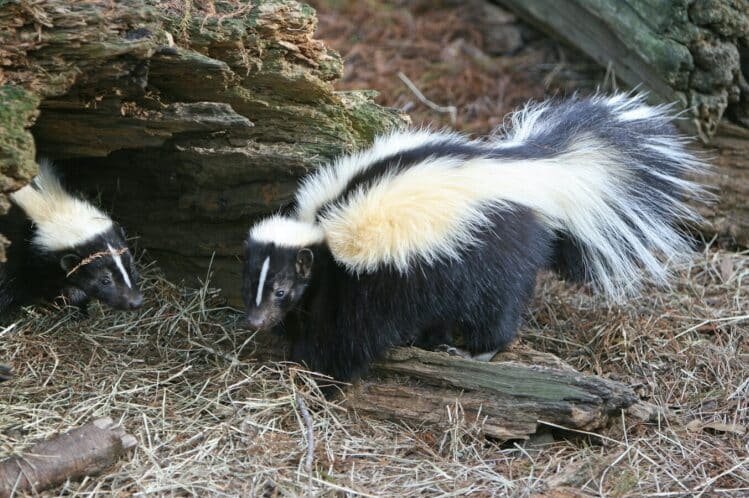
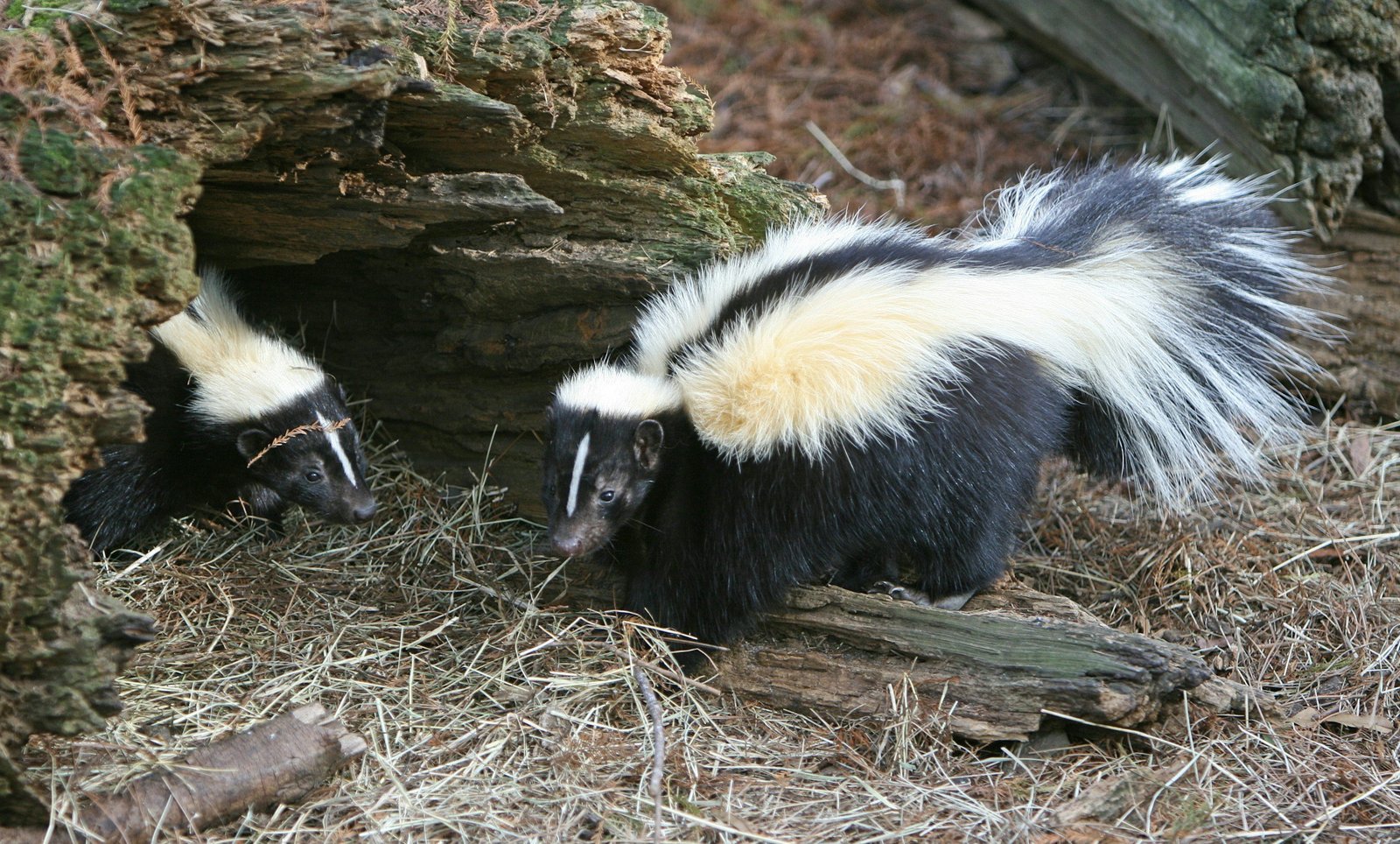
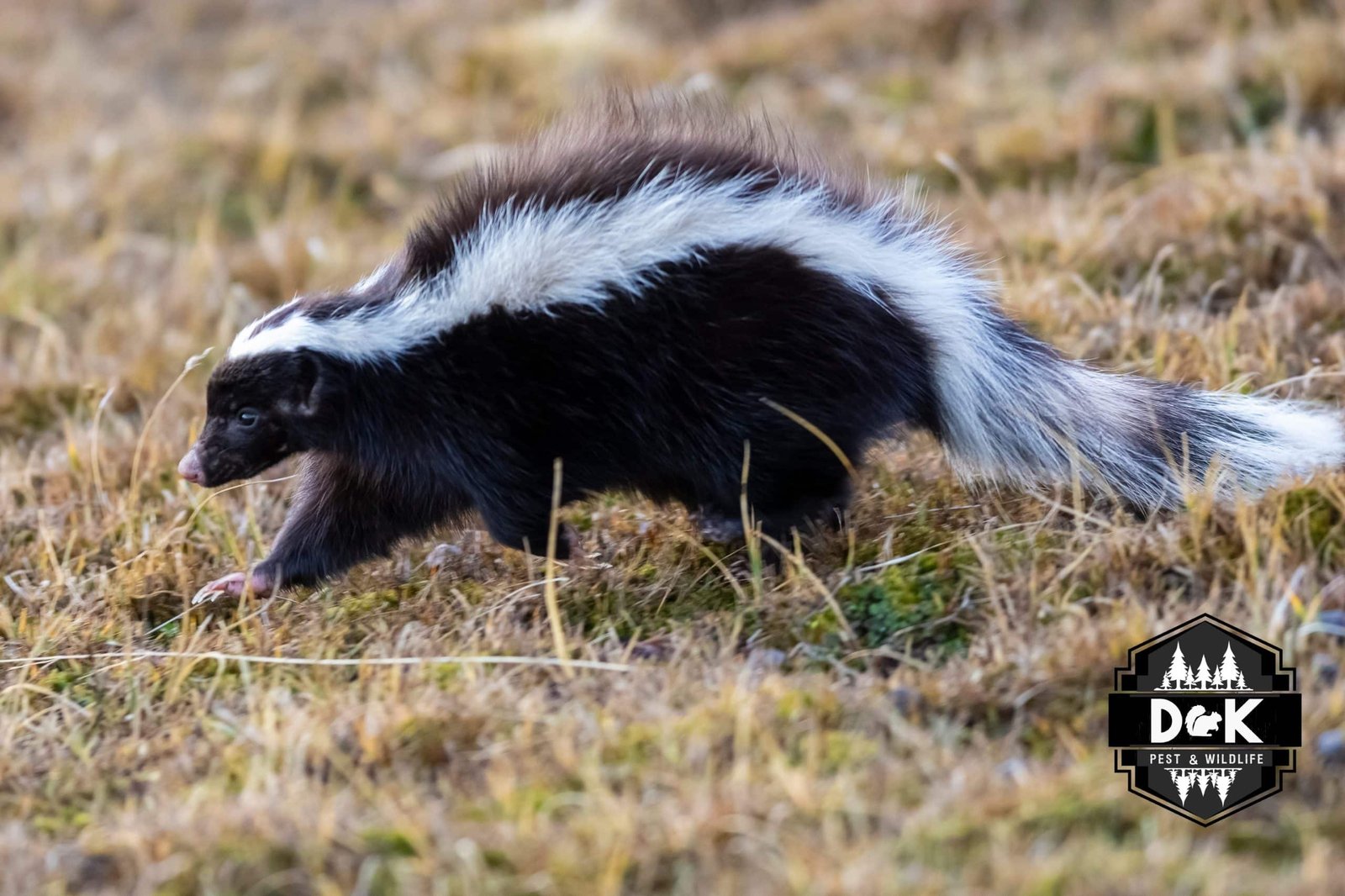
Mephitis mephitis is the familiar black mammal with a bushy tail and one or two white stripes. Markings vary considerably. Adults commonly use ground burrows, culverts, sheds, decks and other sheltered spaces.
Eastern spotted skunk
Spilogale putorius is smaller, with broken white stripes and spots. It is listed as endangered in Illinois and is rarely encountered. A small, unusually patterned skunk should be observed from a distance and reported to the appropriate wildlife authority rather than handled.
Species reference: Illinois Department of Natural Resources—Striped Skunk.
How striped skunks live
Food
Skunks eat insects, grubs, worms, fruit, vegetation, eggs, small animals, carrion, pet food and accessible garbage. Lawns may be disturbed when they dig for larvae.
Night activity
Most foraging happens from dusk through the night. Daytime activity does not automatically mean rabies, especially for a nursing female, but abnormal behavior deserves caution.
Den sites
Skunks may use abandoned burrows or shelter beneath decks, porches, sheds, additions, stoops, woodpiles and crawl spaces.
Winter behavior
They do not truly hibernate. Activity slows during severe weather, and several skunks may share a protected winter den.
Young
Breeding usually occurs in late winter. Kits are generally born in spring and remain dependent on the female for weeks, so every occupied den must be checked for young.
Warning signals
Foot stamping, tail raising, turning the hindquarters and short charges are warnings. Back away slowly and give the animal a clear escape route.
Why skunks settle near people
A property can provide the same essentials as a natural habitat: a dry den, an easy meal and cover from predators. Common attractants include:
- Open gaps beneath decks, porches, sheds and additions
- Grubs and other soil-dwelling insects
- Pet food, bird seed and unsecured garbage
- Low brush, debris piles and accessible crawl spaces
- Water sources and travel corridors along fences
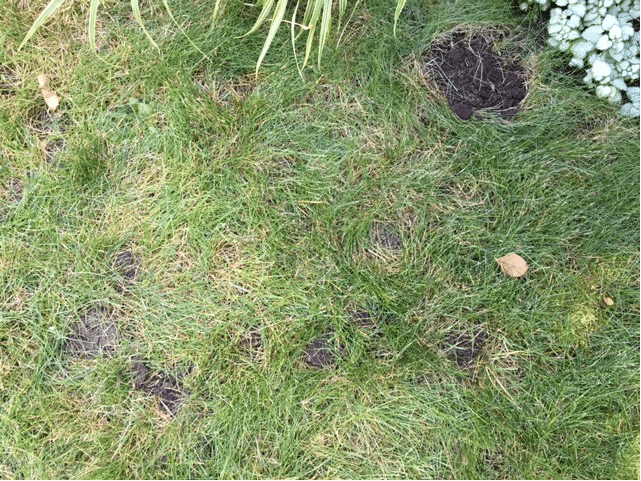
Small, cone-shaped holes in turf can be feeding damage. Persistent odor near one structure, tracks, disturbed soil or repeated nighttime sightings may indicate a nearby den.
Spray, pets and rabies precautions
Skunk spray is a defensive secretion, not a sign that the animal is rabid. It can irritate the eyes and cause nausea. Flush affected eyes with clean water and seek medical or veterinary advice if symptoms are significant.
Skunks are among the wildlife species that can carry rabies in the United States. Warning signs can include unexplained aggression, paralysis, circling, disorientation or repeated stumbling—but infection cannot be diagnosed by appearance alone.
Official guidance: CDC—About Rabies and Illinois Department of Public Health—Rabies.
Why underground fencing matters
Surface repairs alone do not stop an animal built to dig. Durable skunk prevention around decks, sheds and porches typically uses corrosion-resistant underground fencing or hardware cloth installed below grade, often with an outward-facing buried apron.
The structure must be inspected and any skunks or dependent kits removed before the final opening is secured. Closing a den too early can trap wildlife below the structure, create odor and damage problems, or separate a female from her young.
This page covers skunk biology. For inspection, removal and professional underground exclusion work, visit our skunk removal service page.
Move from identification to a safe solution
See how D&K inspects den sites, removes skunks humanely and installs underground fencing to help prevent the problem from returning.