Wasp, Hornet & Yellow Jacket Control
Discover comprehensive pest management strategies for carpenter bees, paper wasps, yellow jackets, bald faced hornets, and mud daubers.
Understanding Our Pest Control Approach
Yellow Jackets, Bald-Faced Hornets, Carpenter Bees, Mud Daubers & Paper Wasps**
Stinging insects are among the most common threats to homes and businesses throughout Illinois. From aggressive nest-defending species like yellow jackets and hornets, to wood-damaging carpenter bees, each insect behaves differently, nests differently, and requires its own removal strategy. Understanding which stinging insect you’re dealing with helps determine the safest and most effective treatment.
This guide breaks down how to identify, locate, and respond to each type of stinging insect.
Yellow Jackets
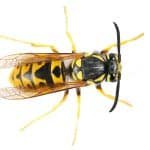
Yellow Jackets are one of the most aggressive stinging insects in the Midwest and will defend their nests in large numbers. They are often mistaken for honey bees but can be identified by their sleek body and intense yellow/black striping.
Key Identifiers
-
Size: ⅜–⅝ inch
-
Smooth, narrow body
-
Bright yellow and black coloration
-
Fast, “choppy” flight pattern
Nest Locations
-
Ground holes
-
Wall voids
-
Attics
-
Landscaping timbers
-
Abandoned rodent tunnels
Behavior
-
Highly territorial
-
Sting repeatedly
-
Attracted to food, sweets, BBQs, outdoor trash bins
Why They’re a Problem
-
High risk of multiple stings
-
Aggression increases in late summer
-
Nest expansion can damage structures
Bald Faced Hornets
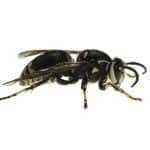
Despite their name, bald-faced hornets are actually a type of yellow jacket, known for their smooth black and white body and large enclosed nest.
Key Identifiers
-
Larger than yellow jackets
-
Black with white face and markings
-
Long, smooth body
Nest Locations
-
Paper nests suspended from:
-
Trees
-
Rooflines
-
Soffits
-
Sheds
-
Deck ceiling corners
-
Behavior
-
Extremely defensive of nest
-
Capable of repeated stings
-
Will chase perceived threats
Why They’re a Problem
-
Nests can reach basketball size
-
Strong sting and venom
-
Dangerous to remove without proper PPE and treatment foam
Carpenter Bees
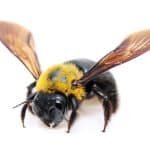
Carpenter bees do not eat wood, but bore tunnels to nest—causing structural weakening over time. They resemble bumble bees but have a shiny, hairless black abdomen.
Key Identifiers
-
Large, bumblebee size
-
Shiny black abdomen (no fuzz)
-
Males hover and “guard” but cannot sting
Nest Locations
-
Decks
-
Fascia boards
-
Fence rails
-
Porch overhangs
-
Unpainted or weather-exposed wood
Behavior
-
Return to and enlarge tunnels every year
-
Attract woodpeckers seeking larvae
-
Holes appear as clean, perfect circles
Why They’re a Problem
-
Repeated return = long term wood damage
-
Multiple tunnels weaken support structures
-
Siding and trim replacement cost rises quickly
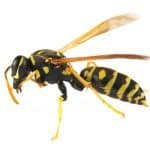
Paper Wasps
Paper wasps form umbrella-shaped open comb nests under sheltered areas. They are less aggressive than yellow jackets unless directly threatened.
Key Identifiers
-
Slender body; long legs that dangle in flight
-
Rusty, brown, or black depending on species
-
Smaller colonies—up to 30 wasps
Nest Locations
-
Under eaves
-
Porch ceilings
-
Light fixtures
-
Barns & sheds
-
Patio furniture stored overwinter
Behavior
-
Mild temperament unless disturbed
-
Prey on caterpillars & yard pests
-
Live in small colony clusters
Why They’re a Problem
-
Face-level nests near walkways create risk
-
Stings still trigger allergic reactions
-
Rapid expansion in spring
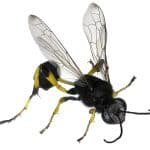
Mud Dauber
Mud daubers are solitary wasps known for unique “mud tube” nests. They are not aggressive, and rarely sting, but their abandoned nests attract other insects.
Key Identifiers
-
Long, skinny body
-
Thread-like waist
-
Slow, hovering movements
Nest Locations
-
Sheds
-
Garages
-
Outdoor electrical boxes
-
Crawl space access doors
-
Under decks
Behavior
-
Solitary nest builders
-
Capture spiders to feed larvae
-
Abandon nests—yellow jackets may reuse them
Why They’re a Problem
-
Nests become pest attractants
-
High activity near entry doors is a nuisance
Why Professional Stinging Insect Removal Matters
DIY nest removal can lead to:
-
Multiple stings
-
Fall hazards from ladders
-
Spreading colonies deeper into the home
-
Incomplete removal and re-infestation
Safe removal requires correct timing, protective equipment, treatment product choice, and structural sealing.
Common Questions About Pest Control
Find answers to your most pressing pest control questions, specifically about carpenter bees, wasps, and hornets.
How can I identify carpenter bees?
Carpenter bees resemble bumblebees but have a shiny, black abdomen. They often hover around wooden structures.
What attracts paper wasps to my home?
Paper wasps are attracted to sheltered areas and food sources like sugary drinks and ripe fruit.
How do I safely remove a yellow jacket nest?
It’s best to contact a professional like D&K Pest Control, as yellow jackets can be aggressive and dangerous.
Are bald-faced hornets dangerous?
Yes, bald-faced hornets are aggressive and can sting multiple times. Professional removal is recommended.
What should I do if I find mud daubers?
Mud daubers are generally non-aggressive, but if they’re a nuisance, D&K can treat and remove their nests.
Ready to Take Action?
Schedule Professional Wasp Control Today
If wasps are nesting on your property or creating a sting risk, don’t wait for the problem to escalate. Contact D&K Pest Control & Wildlife Removal to schedule a professional wasp inspection and safe, effective removal.




Frequently Asked Questions
Where do wasps commonly build nests?
Nests may be built under eaves, inside wall voids, in shrubs or trees, underground, and around sheds, decks, or other protected structures.
Should I remove an active wasp nest myself?
Disturbing an active nest can trigger defensive behavior. Professional help is the safer choice when nests are large, hidden, elevated, or near occupied areas.
Related Services & Resources
Illinois Identification Guide
Wasps, Bees & Look-Alikes of Illinois
Learn how to recognize common yellowjackets, hornets, paper wasps, solitary wasps, bees, and hover flies by their appearance, nests, habits, diet, and sting risk.
Bees vs. Wasps: What Is the Difference?
Bees and wasps are related, but their body shape and feeding habits offer useful clues. Bees are usually hairier and broader through the waist, while many wasps have smoother bodies and a narrow connection between the abdomen and thorax.
Bees collect pollen and nectar to feed their young. Many wasps hunt insects or spiders for their larvae, although adult yellowjackets and hornets also visit flowers and scavenge sweets, fruit, meat, and other foods.
Quick identification clues
- Bee: fuzzy or hairy body, pollen-carrying hairs, usually focused on flowers.
- Wasp: smoother body, narrow waist, often hunts insects or scavenges food.
- Hover fly: one pair of wings, very large eyes, hovering flight, and no stinger.
- Social nest: many workers defend one colony, creating a greater sting risk.
- Solitary nest: one female provisions her own nest and is usually less defensive.
Common social wasps
Yellowjackets, Hornets & Paper Wasps
Yellowjackets
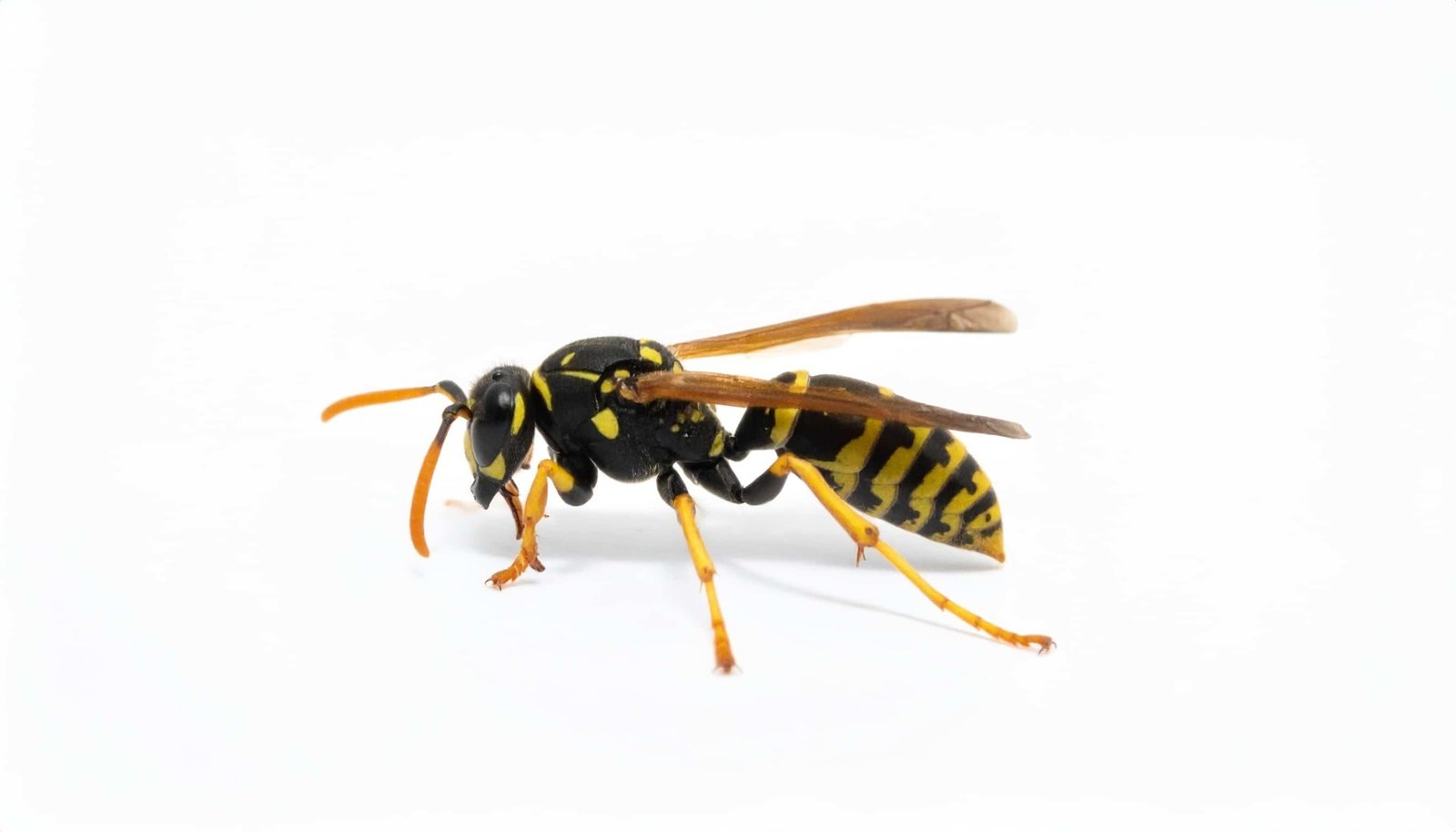
Social • Defensive
Identification: Compact, smooth-bodied black-and-yellow wasps often mistaken for bees.
Nests: Underground rodent burrows, wall voids, crawlspaces, attics, and other cavities.
Habits and diet: Adults consume nectar and sweets; workers hunt insects for larvae and become persistent scavengers around food and trash in late summer.
Risk: High near a nest. Colonies may contain thousands of workers and can sting repeatedly.
Bald-Faced Hornets
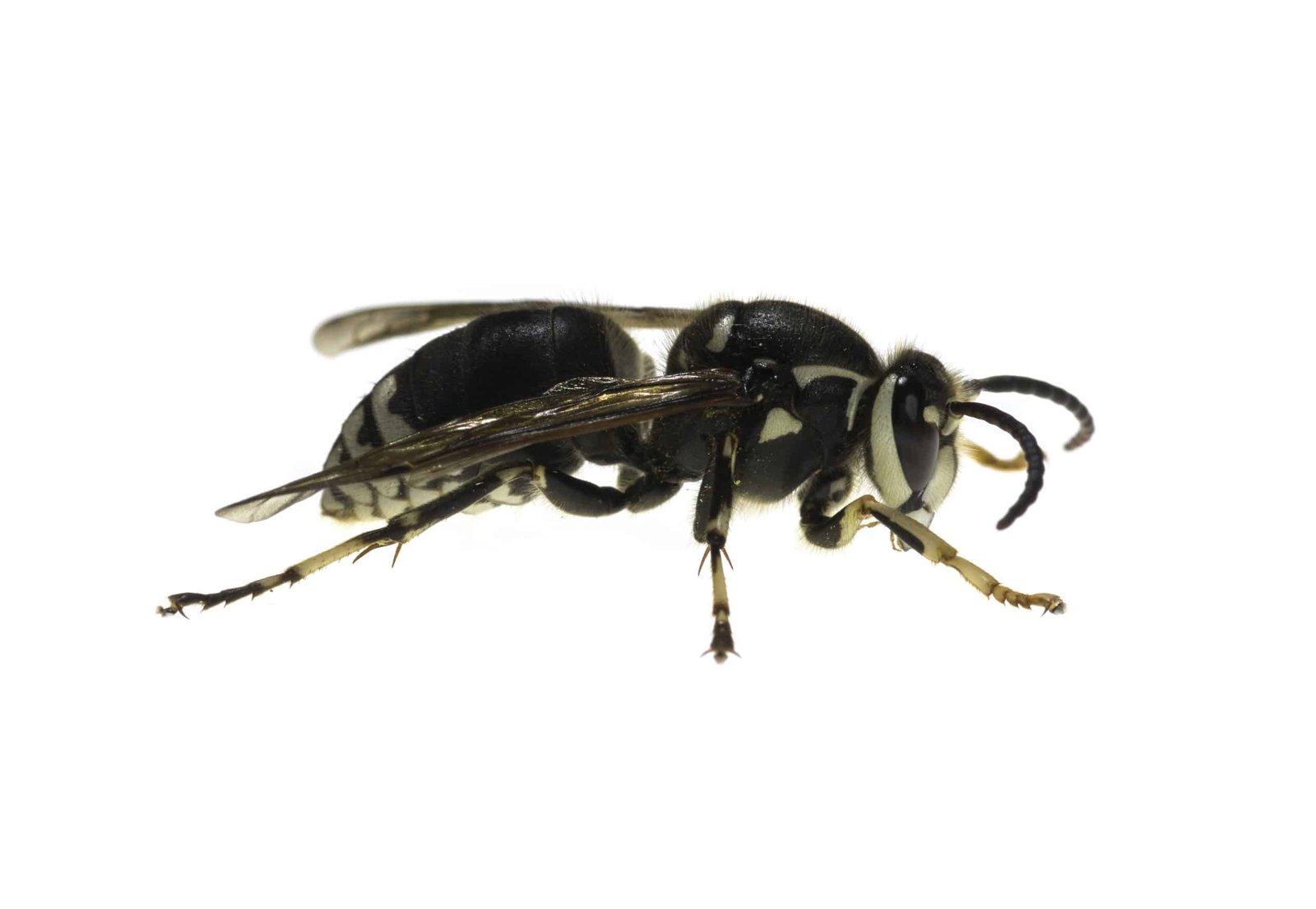
Social • Aerial nest
Identification: Large black-and-white wasps with pale markings on the face. Despite the name, they are a type of yellowjacket.
Nests: Enclosed gray paper nests, often football-shaped, attached to tree limbs or structures.
Habits and diet: Workers prey on insects and visit sweet food sources.
Risk: Defensive around the nest and capable of repeated stings.
Paper Wasps
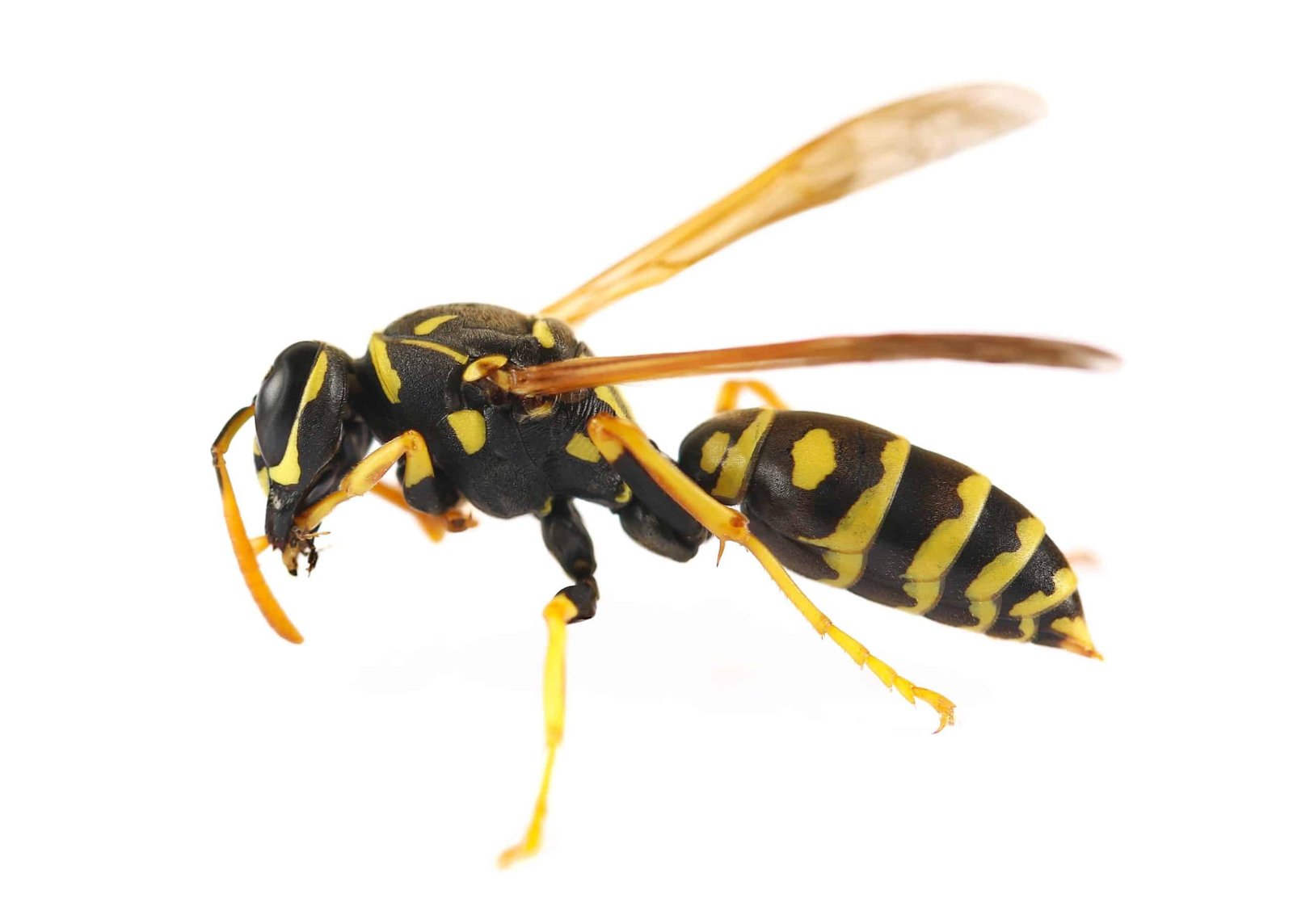
Social • Open comb
Identification: Slender wasps with long legs; color ranges from reddish brown to black and yellow.
Nests: Exposed, umbrella-shaped combs beneath eaves, railings, shutters, soffits, and sheltered overhangs.
Habits and diet: Capture caterpillars and other insects for larvae; adults visit flowers.
Risk: Usually less confrontational away from the nest but will defend the comb.
Solitary wasps
Mud Daubers & Cicada Killers
Mud Daubers
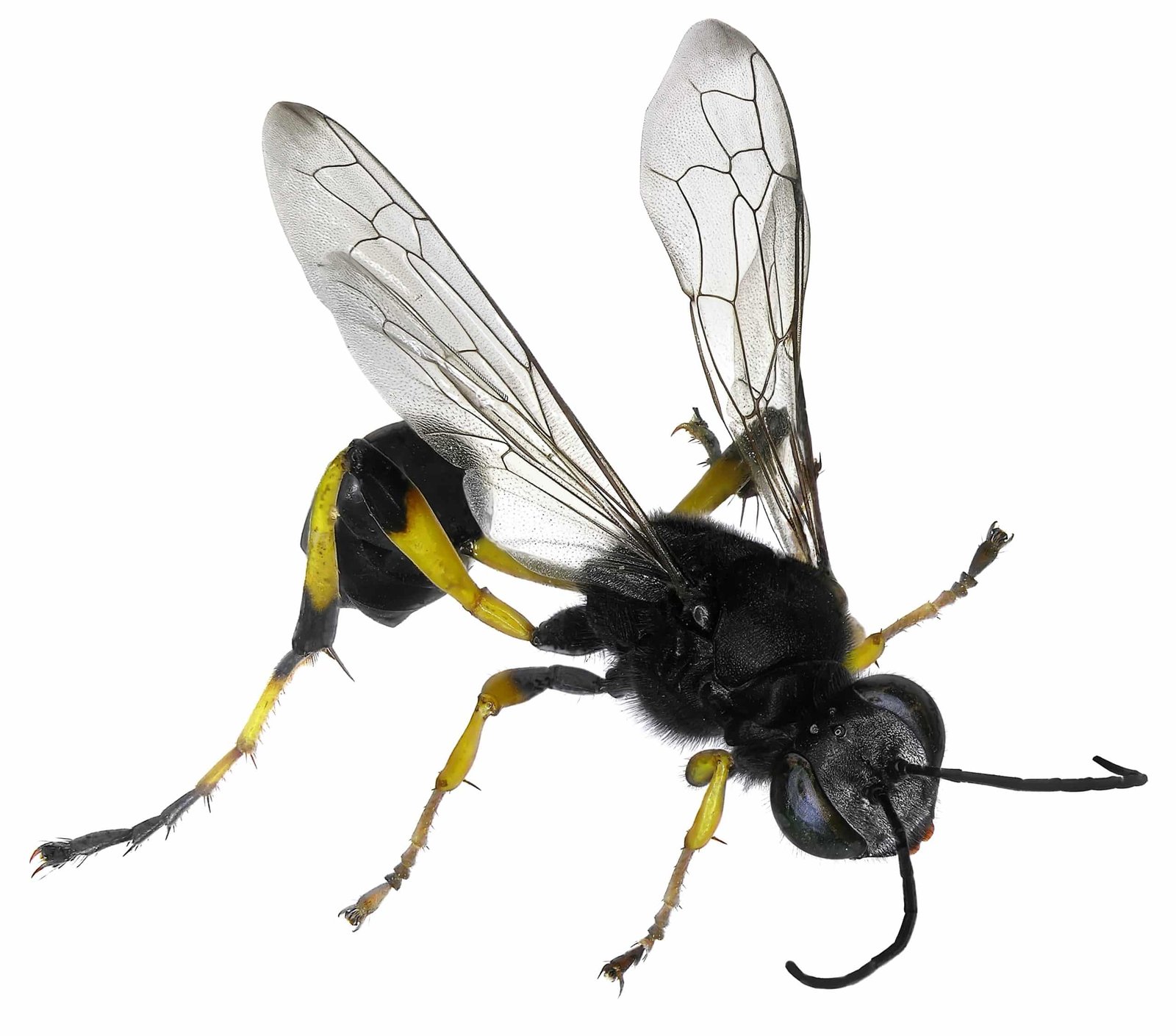
Identification: Slender dark wasps, sometimes with yellow markings or a metallic blue body.
Nests: Tubes or clustered cells made from mud on walls, ceilings, sheds, garages, and other protected surfaces.
Diet: Females stock nest cells with paralyzed spiders for their larvae.
Risk: Low. These solitary wasps rarely defend nests aggressively.
Eastern Cicada Killers
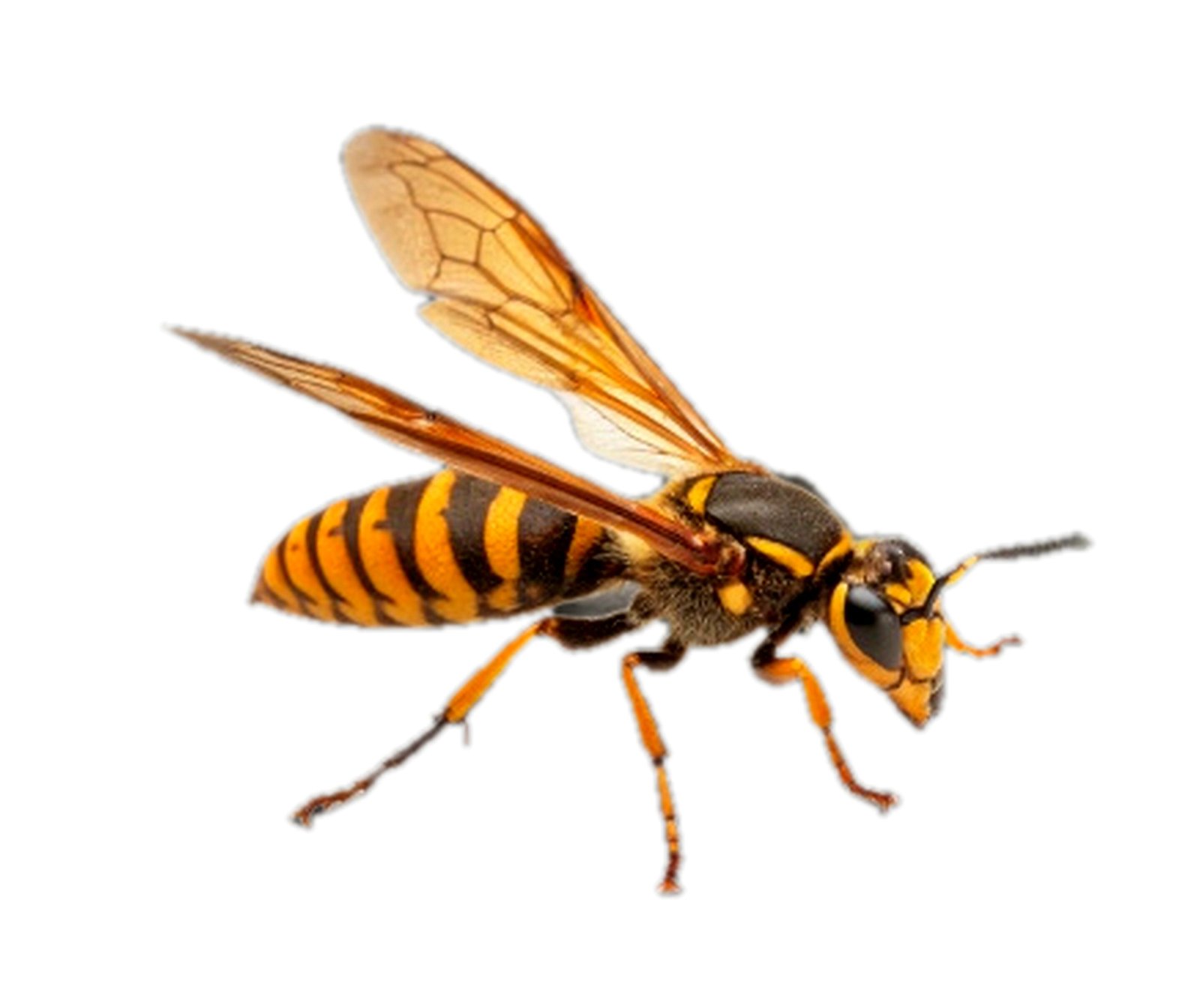
Identification: Very large black-and-yellow wasps with rusty wings and reddish eyes.
Nests: Burrows in sunny, well-drained soil near lawns, walks, patios, and retaining walls.
Diet: Females capture cicadas and carry them to underground chambers for larvae.
Risk: Usually low. Males may patrol closely but cannot sting; females typically sting only when handled or seriously disturbed.
Pollinators and mimics
Common Bees & Hover Flies
Honey Bees
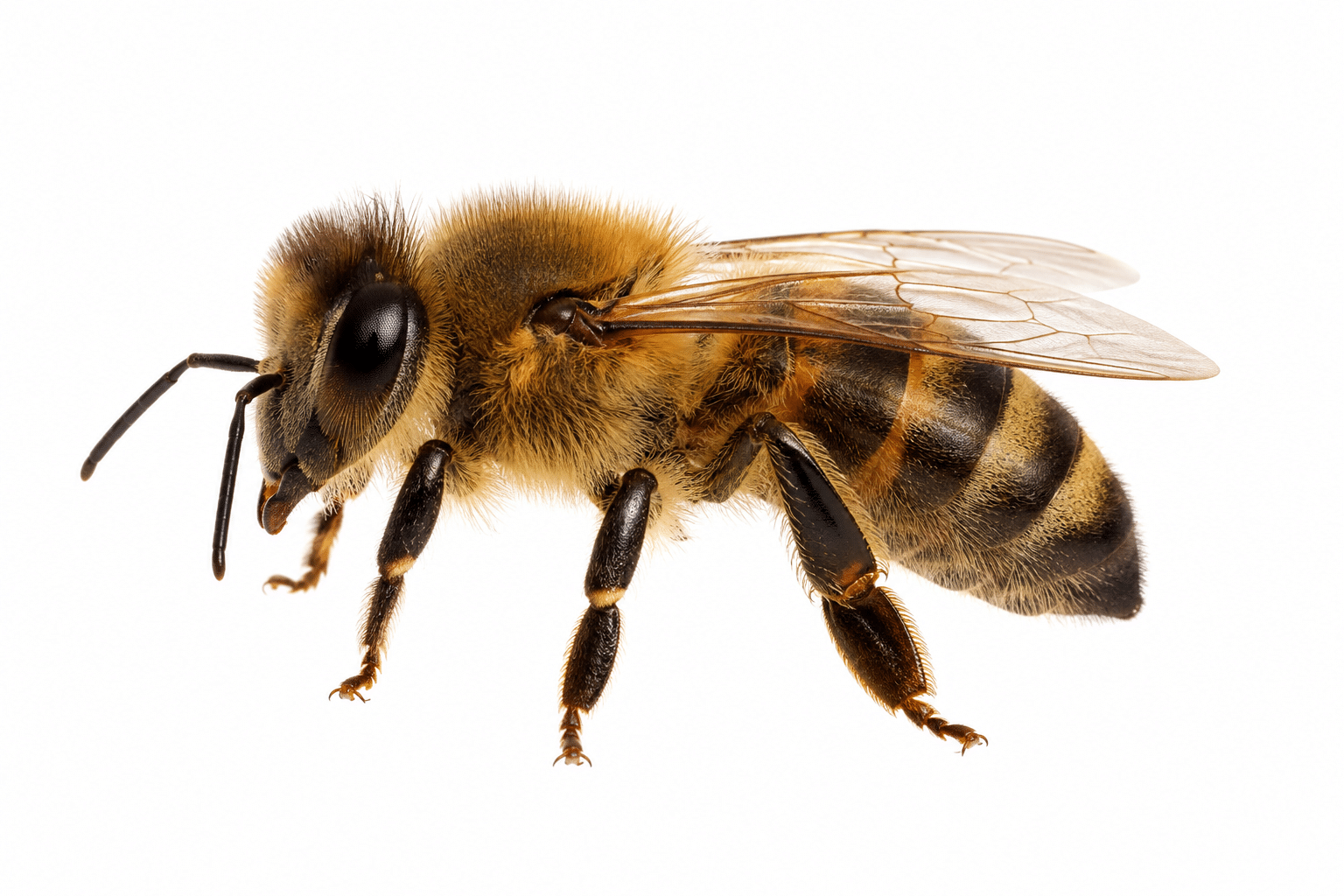
Identification: Hairy, honey-brown bees with muted dark bands.
Nests: Large perennial colonies in tree cavities, wall voids, and managed hives. Temporary spring swarms may rest on trees or buildings while scouts search for a cavity.
Diet: Nectar and pollen.
Risk: Workers defend the colony, but foraging bees are usually focused on flowers. Honey-bee situations may call for a beekeeper or relocation specialist.
Bumble Bees
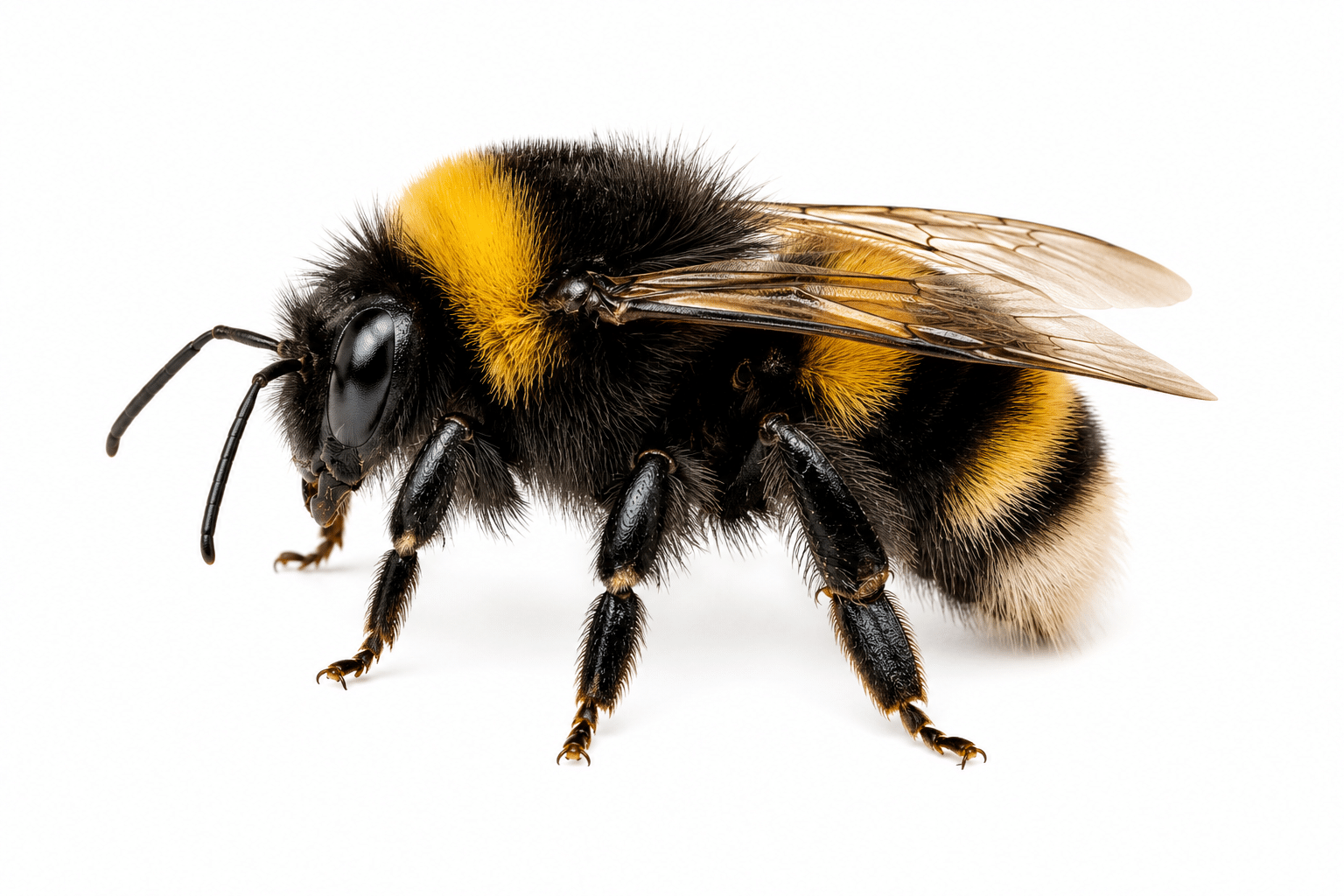
Identification: Large, fuzzy bees with black, yellow, white, orange, or brown bands.
Nests: Seasonal colonies commonly located in abandoned rodent burrows, beneath porches, or in protected cavities.
Diet: Nectar and pollen; important buzz pollinators.
Risk: Generally calm while foraging but capable of defending a nest.
Miner Bees
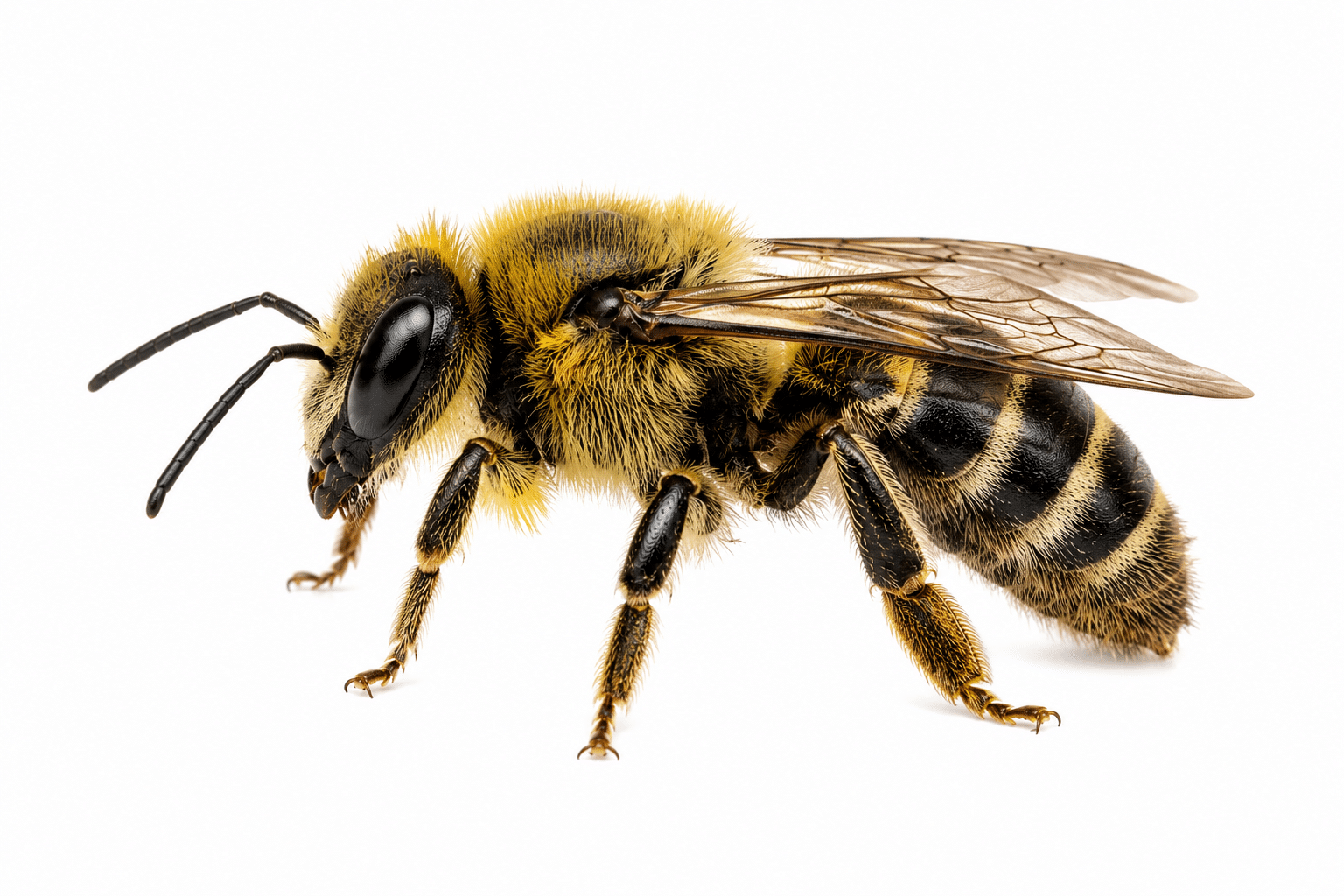
Identification: A broad group of small to medium native bees; many resemble honey bees but vary widely in color and hair.
Nests: Individual tunnels in bare or thin turf. Many entrances may occur together even though each female maintains her own nest.
Diet: Pollen and nectar stored for larvae.
Risk: Low. Most ground-nesting native bees are solitary and rarely sting unless handled.
Hover Flies
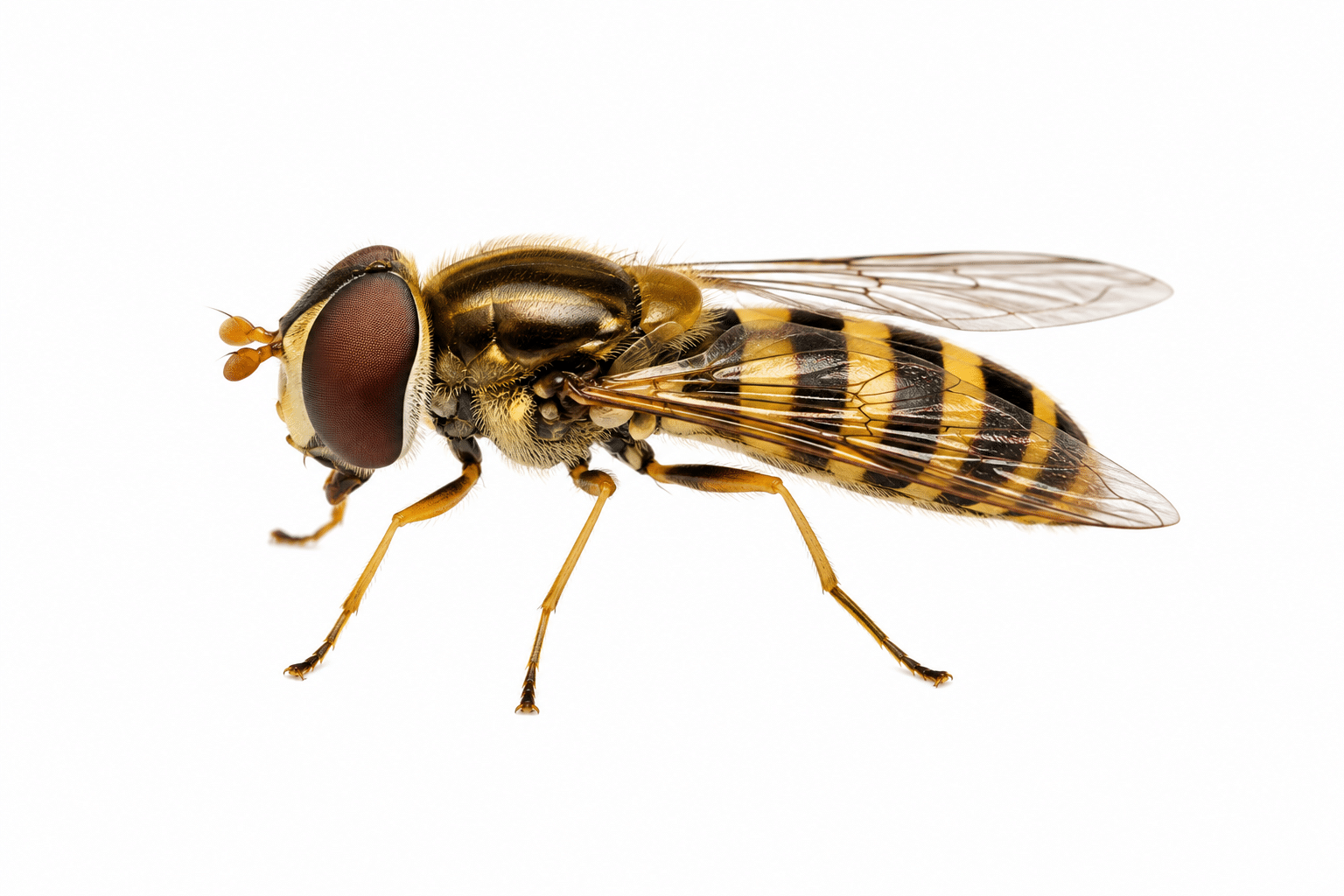
Identification: Yellow, orange, and black flies that imitate bees or wasps. They have one pair of wings, large fly-like eyes, and can hover almost motionless.
Habits: Adults visit flowers; larvae of many species eat aphids and other small pests.
Risk: None. Hover flies cannot sting.
Carpenter Bees
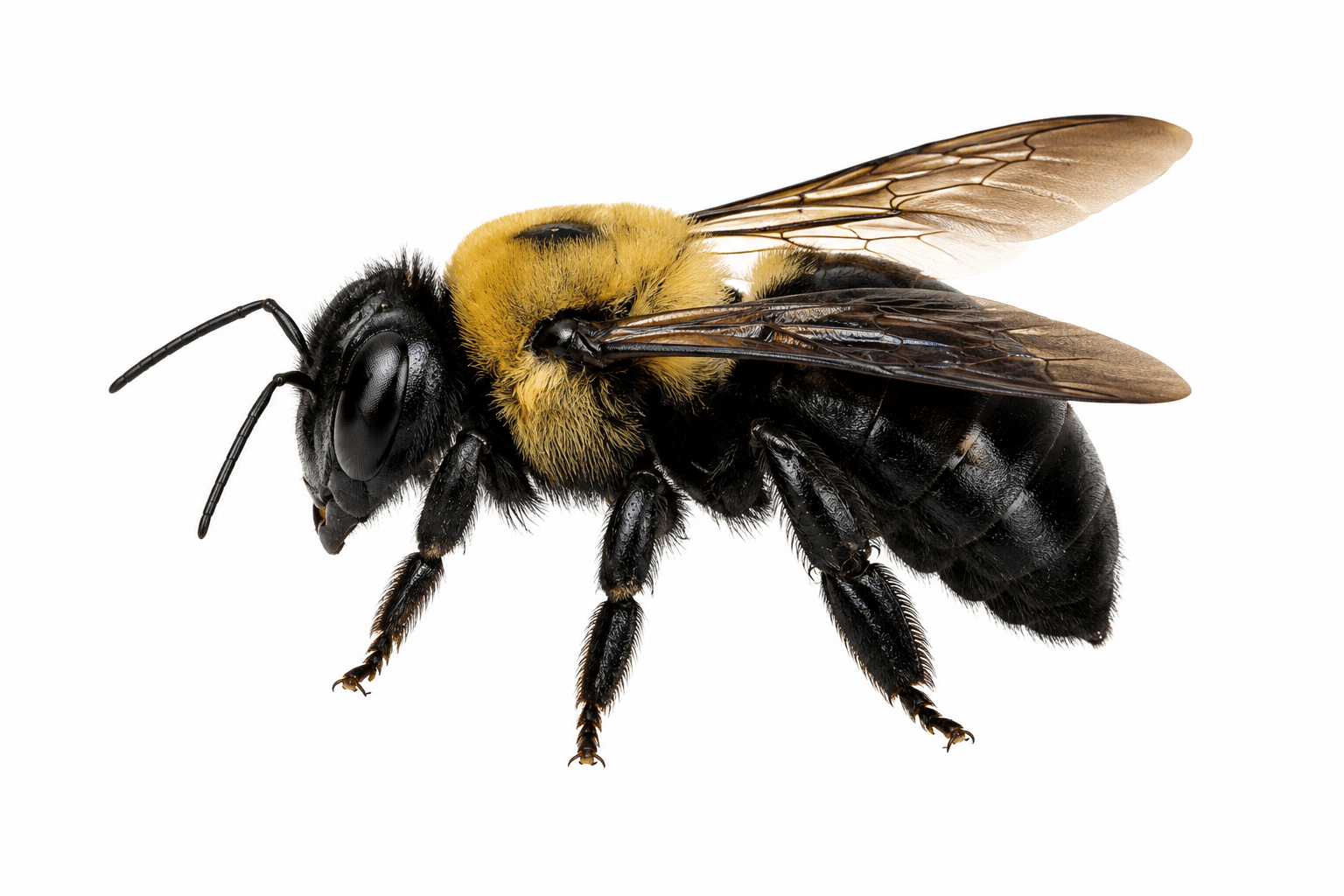
Identification: Bumble-bee look-alikes with a shiny, mostly hairless black abdomen.
Nests: Females excavate round tunnels in unfinished or weathered wood.
Risk: Males hover and investigate but cannot sting. Females can sting but are usually reluctant.
When Identification Matters
Activity at flowers is often harmless, while repeated traffic into a wall, ground opening, soffit, or enclosed paper nest can signal a colony. Note the insect’s body shape, flight pattern, nest material, and entry point from a safe distance.
Sting safety
Do not disturb an active social nest. People with known sting allergies should follow their physician’s emergency plan and avoid the nesting area. Seek urgent medical care for breathing difficulty, facial or throat swelling, widespread hives, dizziness, or other signs of a severe allergic reaction.
Frequently Asked Identification Questions
Is a bald-faced hornet really a hornet?
No. It is a large aerial-nesting yellowjacket, though its enclosed gray paper nest and defensive behavior resemble those of hornets.
Are cicada killers dangerous?
They look intimidating but are solitary. Males cannot sting, and females are usually nonaggressive unless handled or severely disturbed.
Why are many yellowjackets around my patio in late summer?
Colonies are largest late in the season, and workers increasingly scavenge sugary drinks, fruit, meat, and trash as natural insect food becomes less available.
How can I tell a hover fly from a bee?
Hover flies often remain suspended in the air, have very large eyes and one pair of wings, and cannot sting. Bees have two pairs of wings and are usually hairier.
Illinois Resources & Professional Help
For identification and biology, visit the Illinois Department of Public Health bee and wasp guide, University of Illinois Extension native bee guide, and Illinois Extension hover fly guide.
If a social wasp nest is creating a sting hazard, see our professional wasp control and nest removal service.
Need Treatment Instead of Identification?
We carry ladders and extension equipment for elevated eaves, rooflines, and other hard-to-reach nests.