Opossums of Illinois
Learn how to identify the Virginia opossum, understand its nocturnal habits, diet, den sites, young, defensive behaviors and potential risks around homes.
Meet the Virginia opossum
The Virginia opossum is found throughout Illinois and is North America’s only native marsupial. Although its pointed face and nearly hairless tail can resemble a large rat, an opossum is not a rodent.
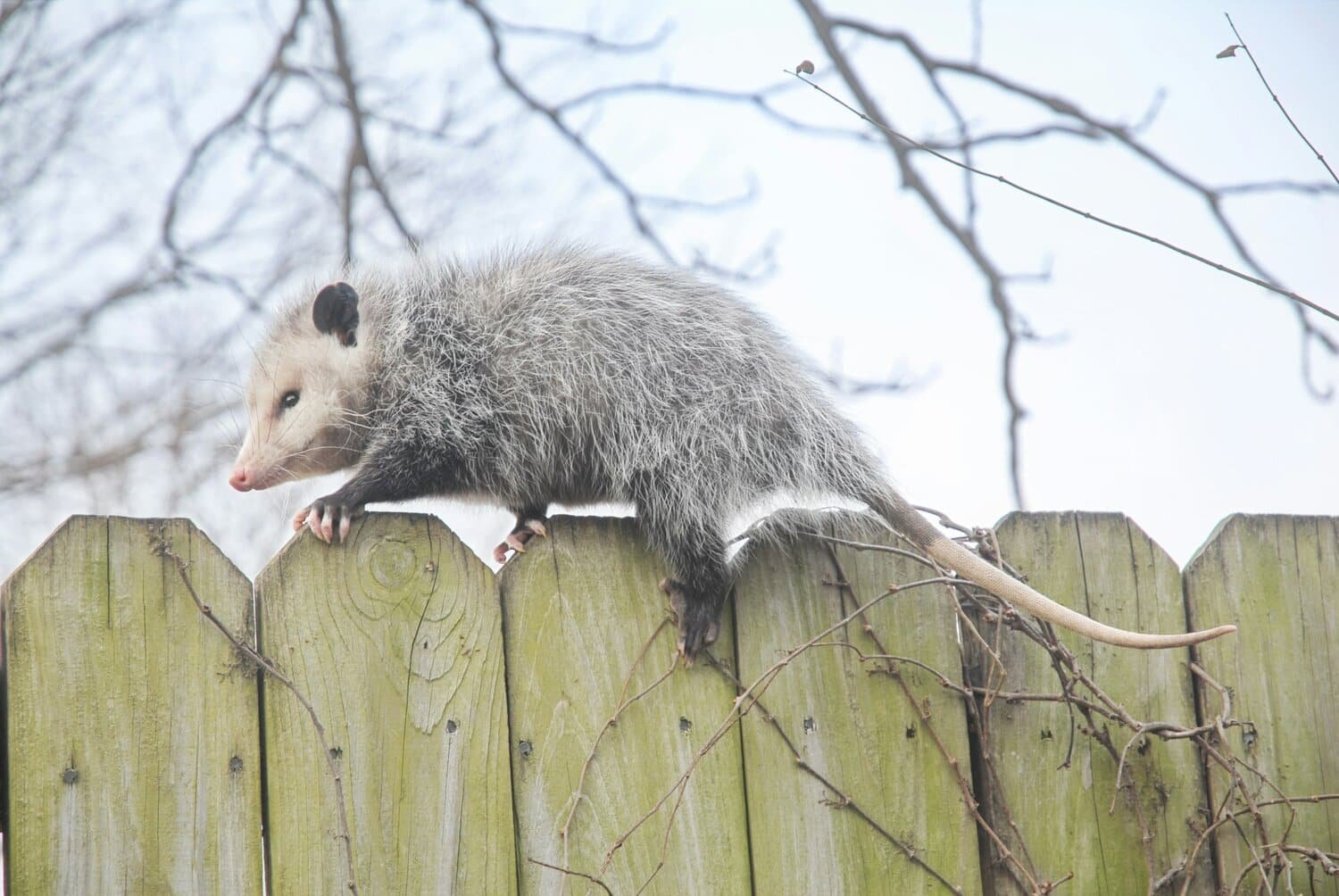
Adults are roughly the size of a house cat, with coarse gray-and-white fur, dark ears, a pale face, a long prehensile tail and 50 teeth. Their hind feet include an opposable, thumb-like toe that helps them climb.
Opossums are mostly nocturnal and solitary. Seeing one after dark is normal; seeing one during daylight does not automatically mean it is sick. Hunger, disturbance, cold weather or a female caring for young can change its schedule.
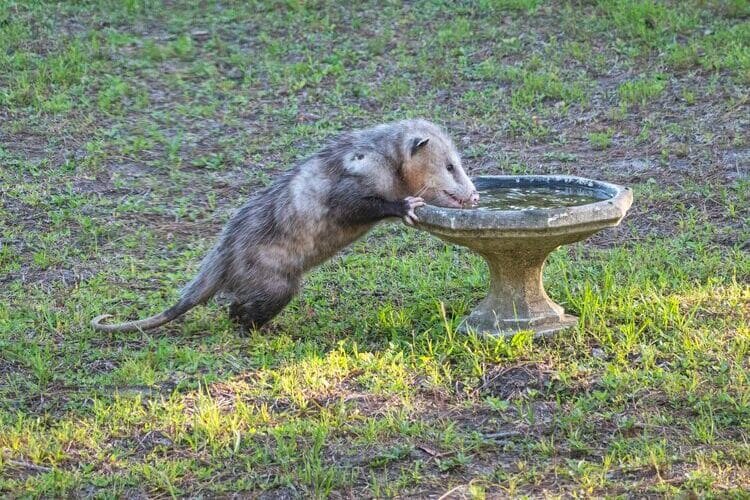
Opossum facts at a glance
Virginia opossum
Didelphis virginiana
Primarily nocturnal and usually solitary.
Omnivorous and highly opportunistic.
Hollow trees, abandoned burrows and spaces beneath structures.
What opossums eat and where they spend the day
Natural foods
Insects, worms, snails, fruit, berries, nuts, carrion, eggs and occasional small animals make up a varied diet.
Food near homes
Unsecured garbage, outdoor pet food, bird seed, compost and fallen fruit can turn a passing visitor into a repeat visitor.
Daytime shelter
Opossums use hollow logs, tree cavities, brush piles and abandoned burrows. Around homes they may shelter beneath decks, sheds, porches and additions.
Joeys begin life in their mother’s pouch
Opossums give birth after a very short pregnancy. The tiny, undeveloped young crawl into the mother’s pouch and attach to a teat while they continue developing.
As joeys grow, they leave the pouch and may ride on the mother’s back. A female encountered around a den site can therefore have young that are difficult to see. This is why an occupied area should never be sealed without first checking for a family.
Young eventually become independent, and adults do not normally live in permanent family groups. Opossums also tend to use temporary dens rather than maintaining one lifelong home.
Hissing, showing teeth and “playing possum”
A warning display
When threatened, an opossum may hiss, drool, growl or display its many teeth. These behaviors are intended to make a predator back away.
Playing dead
Becoming limp and unresponsive is an involuntary stress response. The animal may remain still for minutes or hours before recovering.
Give it space
Most opossums prefer escape to confrontation. Keep pets and children away and do not attempt to handle or relocate one yourself.
What risks are associated with opossums?
Parasites and germs
Like other wild mammals, opossums may carry fleas, ticks, intestinal parasites and germs in droppings or urine. Avoid direct contact and use appropriate precautions around contaminated material.
Bites and scratches
An animal that is cornered or handled can bite. Wash any bite or scratch immediately and contact a healthcare professional or local public-health authority.
Rabies context
Rabies is uncommon in opossums, but it cannot be ruled out by appearance alone. Never approach an animal acting strangely, unable to move normally or making unprovoked contact.
Opossum myths and facts
Myth: Opossums are rodents.
Fact: They are marsupials. Their pouch, reproductive biology and anatomy are very different from mice and rats.
Myth: A daytime opossum must be rabid.
Fact: Daytime activity can occur for many normal reasons. Behavior should be evaluated as a whole, and unusual or unsafe situations should be left to professionals.
Myth: An opossum showing its teeth is attacking.
Fact: The display is usually defensive. Back away and provide a clear escape route.
Myth: An opossum hanging around is always a permanent resident.
Fact: Opossums often move among temporary shelters, although easy food and secure den space can encourage repeated visits.
For additional Illinois natural-history information, visit the Illinois Department of Natural Resources Virginia opossum guide.
Get help without confusing education and service
Our service page explains how D&K inspects, removes opossums humanely, checks for dependent young and closes vulnerable access points.