Common Nuisance Birds of Illinois
Learn how to identify house sparrows, European starlings and rock pigeons, where they nest, what they eat and why vents, soffits and ledges become problem areas around homes.
Why some birds settle inside buildings
Many birds naturally seek protected cavities, shelves and ledges for nesting or resting. Homes reproduce those features: a bathroom exhaust outlet resembles a sheltered cavity, a gable vent can lead to a quiet attic and a soffit gap offers cover from rain and predators.
In Northern Illinois, the birds most often associated with building conflicts are European starlings, house sparrows and rock pigeons. Starlings and sparrows frequently use vents and small structural openings. Pigeons are more strongly associated with broad ledges, rooflines and repeated roosting areas.
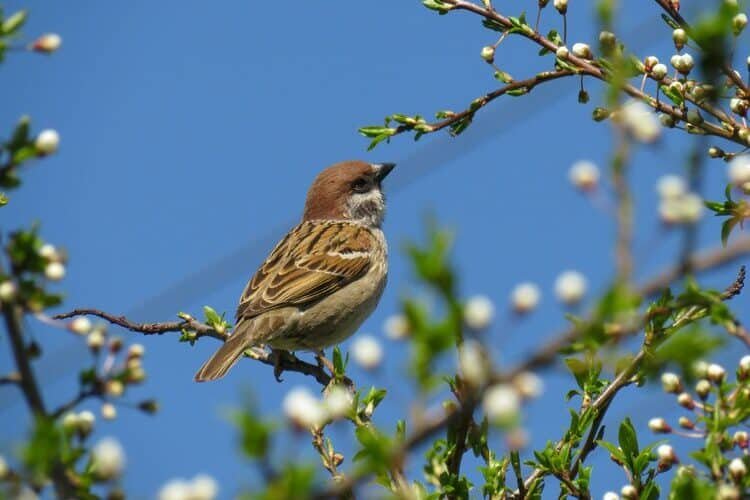
Three birds commonly found around Illinois buildings
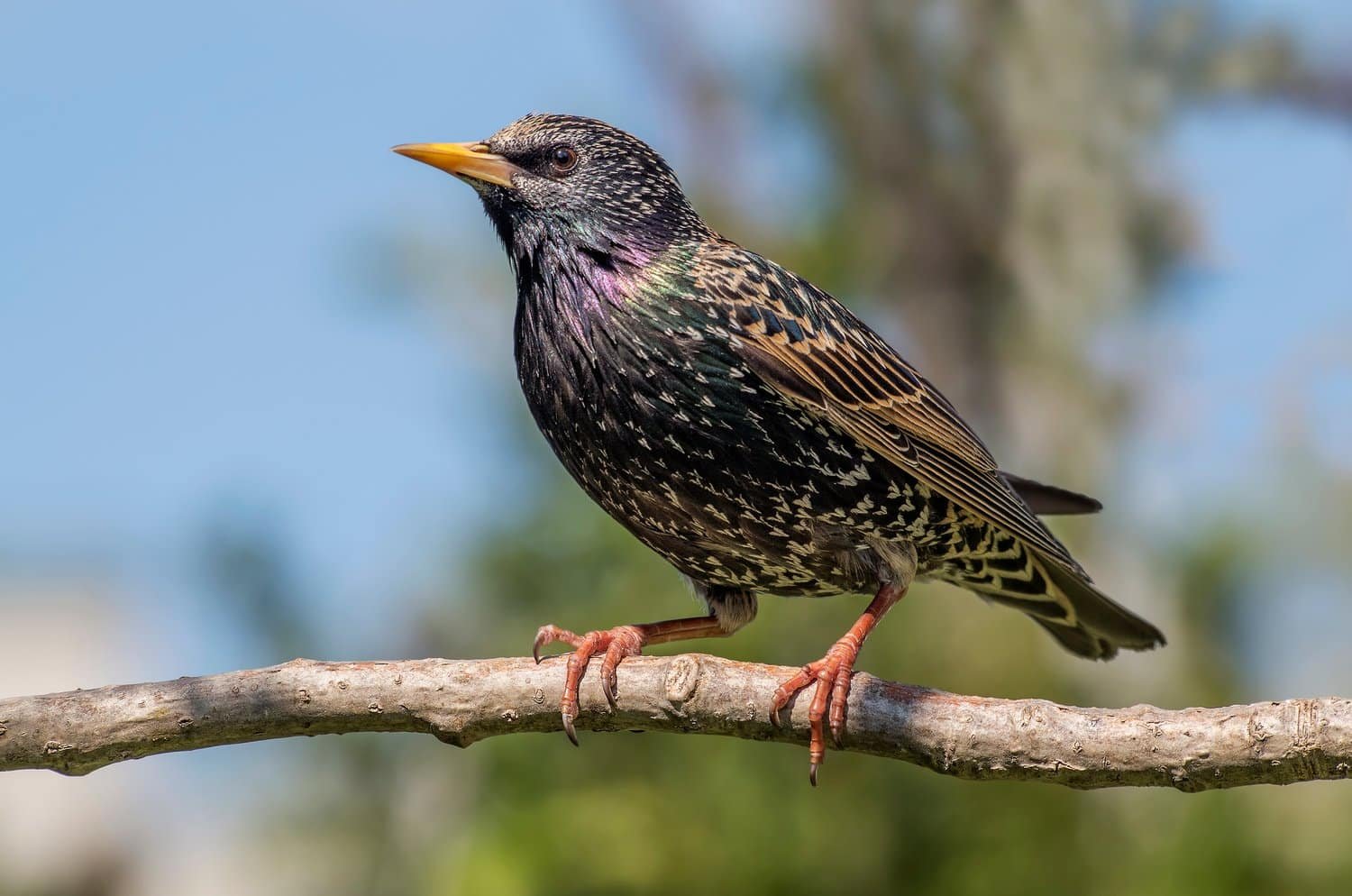
European Starling
Identification: Stocky, short-tailed birds with pointed bills. Adults look glossy black with purple-green iridescence; winter plumage is marked with pale speckles.
Habits: Starlings are social, noisy and highly adaptable. They gather in flocks and aggressively compete for cavities.
Diet: Insects, grubs, fruit, seeds, spilled grain and food scraps.
Nesting: Cavities in trees and buildings, including bathroom vents, attic vents, gable openings and soffits. Their nests can be bulky and densely packed.
House Sparrow
Identification: Small, sturdy birds. Males have a gray crown, chestnut neck and black throat patch; females are plainer tan-brown with a pale eyebrow.
Habits: House sparrows live closely with people and repeatedly use successful shelter sites. They often remain near buildings throughout the year.
Diet: Seeds, grains, crumbs and insects, especially when feeding young.
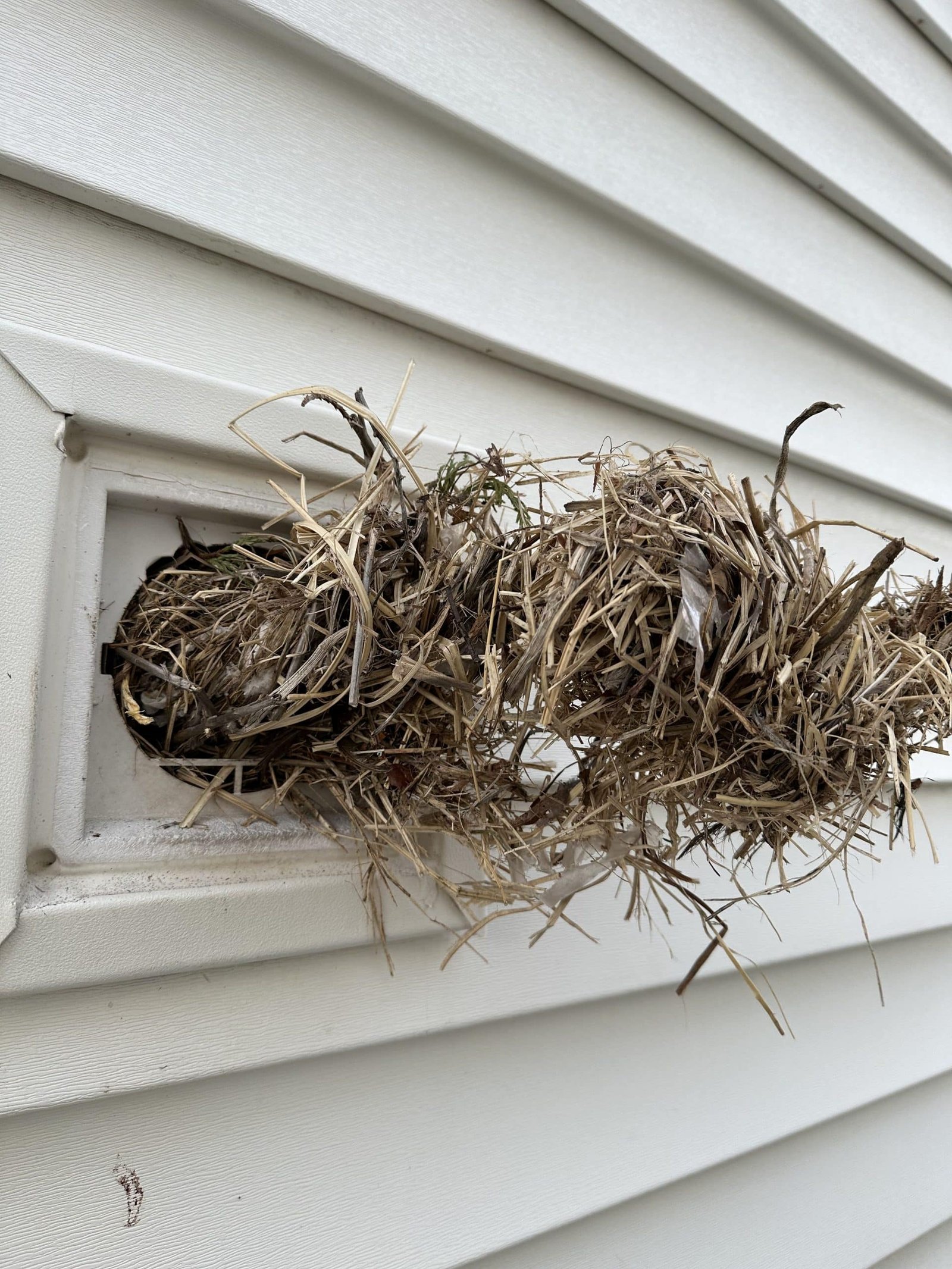
Nesting: Small cavities and protected gaps around vents, soffits, signs, trim and wall voids. Loose grass, feathers and debris may protrude from the opening.
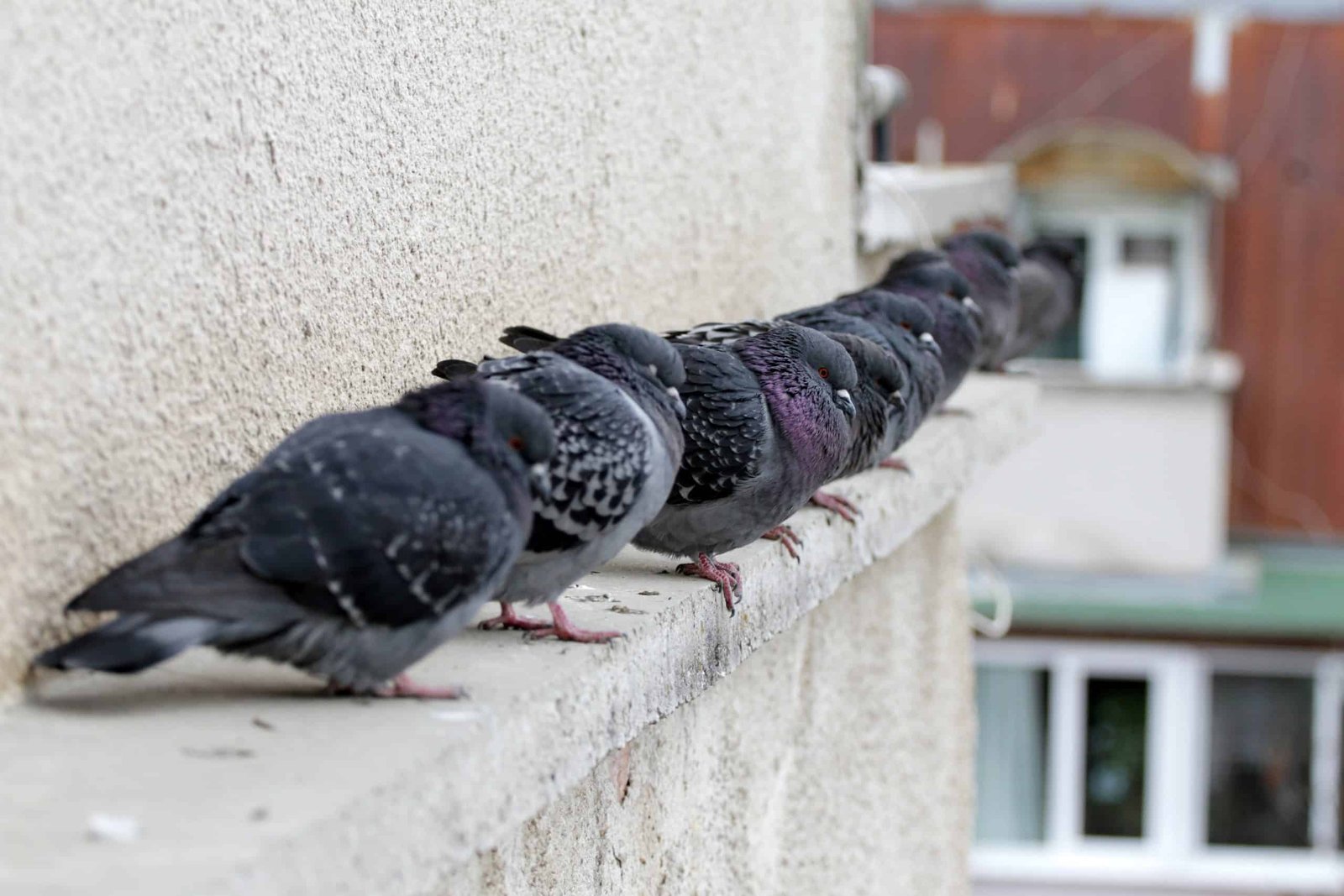
Rock Pigeon
Identification: Medium-sized birds with broad chests and small heads. Common gray birds show two dark wing bars and an iridescent neck, although colors vary widely.
Habits: Pigeons gather on stable elevated surfaces and return to established feeding, nesting and roosting sites.
Diet: Seeds, grains and readily available human food.
Nesting: Shallow stick platforms on ledges, beams, roof structures and sheltered recesses. Pigeons can nest repeatedly when food and shelter remain available.
What birds leave behind
- Chirping, fluttering or scratching inside a wall, ceiling or vent
- Birds repeatedly entering the same exterior opening
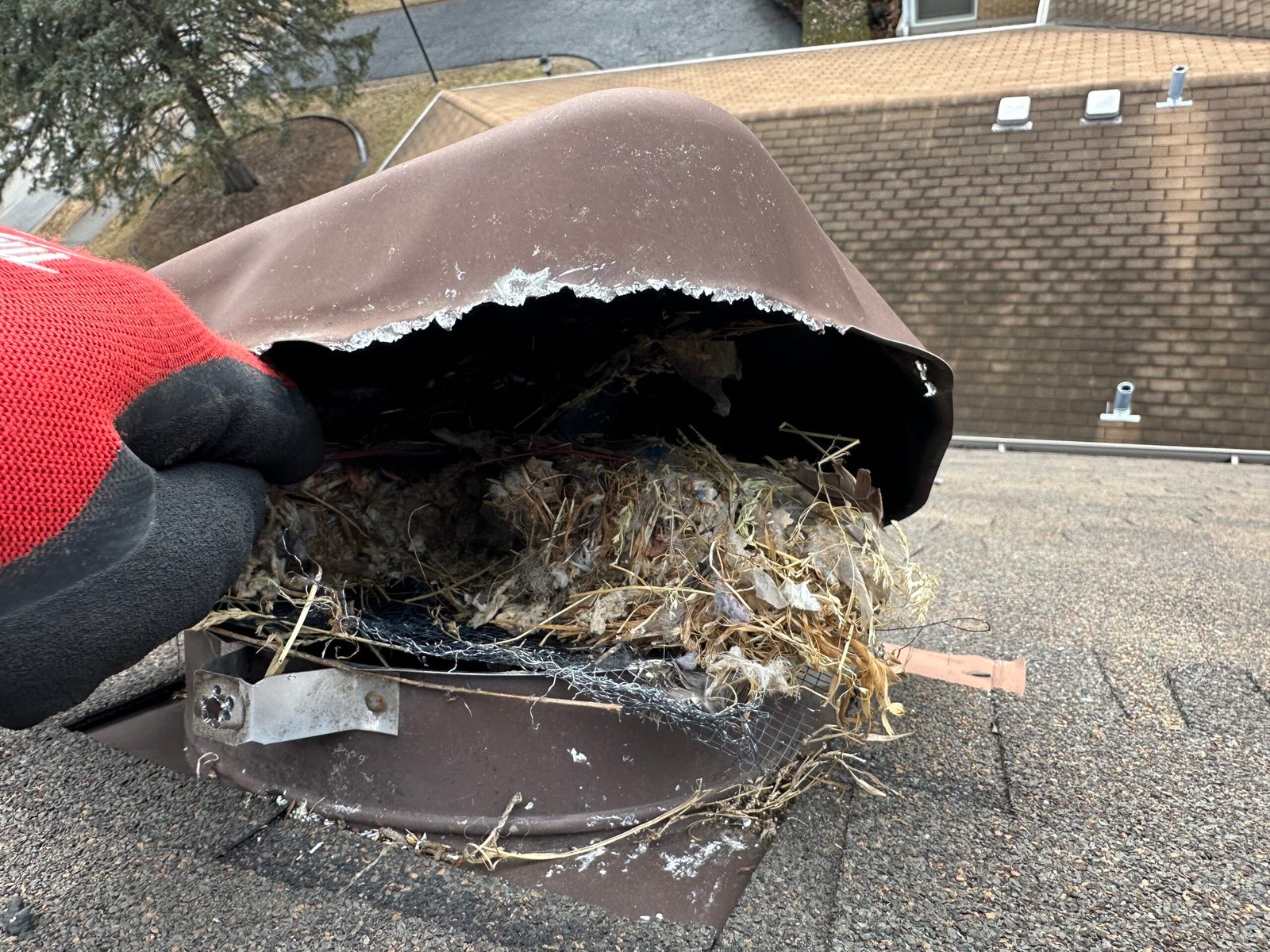
- Grass, twigs, feathers or nesting material visible at a vent
- Reduced bathroom or dryer exhaust airflow
- Droppings below a ledge, gable, downspout or roof edge
- Odor, flies, beetles or bird mites around an old nest
Activity can be intermittent. Adult birds may leave to feed and return, so a quiet vent is not proof that the nest is inactive.
Why a bird nest in a vent should not be ignored
Nesting material can restrict airflow, trap moisture and collect feathers, food and droppings inside a duct or wall opening. A blocked bathroom vent may stop removing humid air effectively. Dryer exhaust requires special attention because lint and heat must move freely through the outlet.
Old nests can also support secondary pests such as mites, flies and beetles. Accumulated droppings create staining, odors and slip hazards on walkways or equipment below a roost.
Use care around large accumulations of droppings
Histoplasmosis is caused by breathing in spores from the fungus Histoplasma, which can grow in material enriched by bird or bat droppings. Fresh droppings on a windowsill are not the same as a long-standing contaminated roost, but dry sweeping or disturbing a large accumulation can send dust into the air.
Not every bird or active nest can be handled the same way
Most native birds are protected by federal law. The introduced house sparrow, European starling and rock pigeon are generally not protected by the Migratory Bird Treaty Act, but species identification still matters before an active nest is disturbed. State rules, local ordinances and site conditions may also apply.
If you cannot confidently identify the bird—or if eggs or dependent young are present—avoid sealing the opening. Closing an active route can trap birds inside the structure or separate adults from young.
- Observe the bird from a distance and note its markings
- Watch which opening it uses and when it returns
- Do not reach into a dark vent or cavity
- Do not close an opening until the interior has been checked
- Have a professional identify the species and nesting stage
Federal overview: U.S. Fish & Wildlife Service—Migratory Bird Treaty Act.
Keep pets and people out, close interior doors, turn off ceiling fans and open one clear exterior exit when it is safe to do so. Darken other windows if possible. If the bird is injured, trapped or will not leave, contact a wildlife professional or licensed rehabilitator.
What to do if a bird is inside a vent
Stop using the affected exhaust when practical, especially if airflow is restricted. Do not push nesting farther into the duct. Have the vent inspected so the birds, young and nesting can be addressed before a protective cover or replacement housing is installed.
Common questions about nuisance birds
Do starlings and sparrows return to old nests?
They often return to familiar successful sites or nearby openings. Removing the nest without protecting the entry point leaves the structure available for another nesting attempt.
Why do birds choose bathroom vents?
The exterior hood offers a sheltered cavity while the duct leads into a quiet protected space. Loose or damaged vent flaps make access easier.
Are bird droppings always dangerous?
Small amounts of fresh droppings are different from a large, dry, long-standing accumulation. Risk rises when contaminated material is disturbed and dust becomes airborne, particularly for people with weakened immune systems.
Can bird nests cause insects inside?
Yes. Mites, flies and beetles may live in or around old nests and can move indoors after the birds leave or the nest dries out.
What is the difference between nesting and roosting?
Nesting means birds are building a site for eggs and young. Roosting means they are resting or sleeping in a protected location, often in groups. Both behaviors can create recurring droppings and property issues.
Have birds in a vent, attic, soffit or ledge?
Our bird-removal service covers inspection, nest removal, cleanup and purpose-built exclusion for vents and structural openings across Northern Illinois.