
Foxes & Coyotes of Illinois
Illinois is home to coyotes, red foxes, and gray foxes. Learn how to compare these native canids, recognize their tracks and denning behavior, understand their diets, and respond safely to neighborhood sightings.
Coyote, red fox, or gray fox?
Coyote
- Usually 20–40 pounds
- Gray or red-gray coat
- Black-tipped tail held low while running
- Long-legged, doglike profile
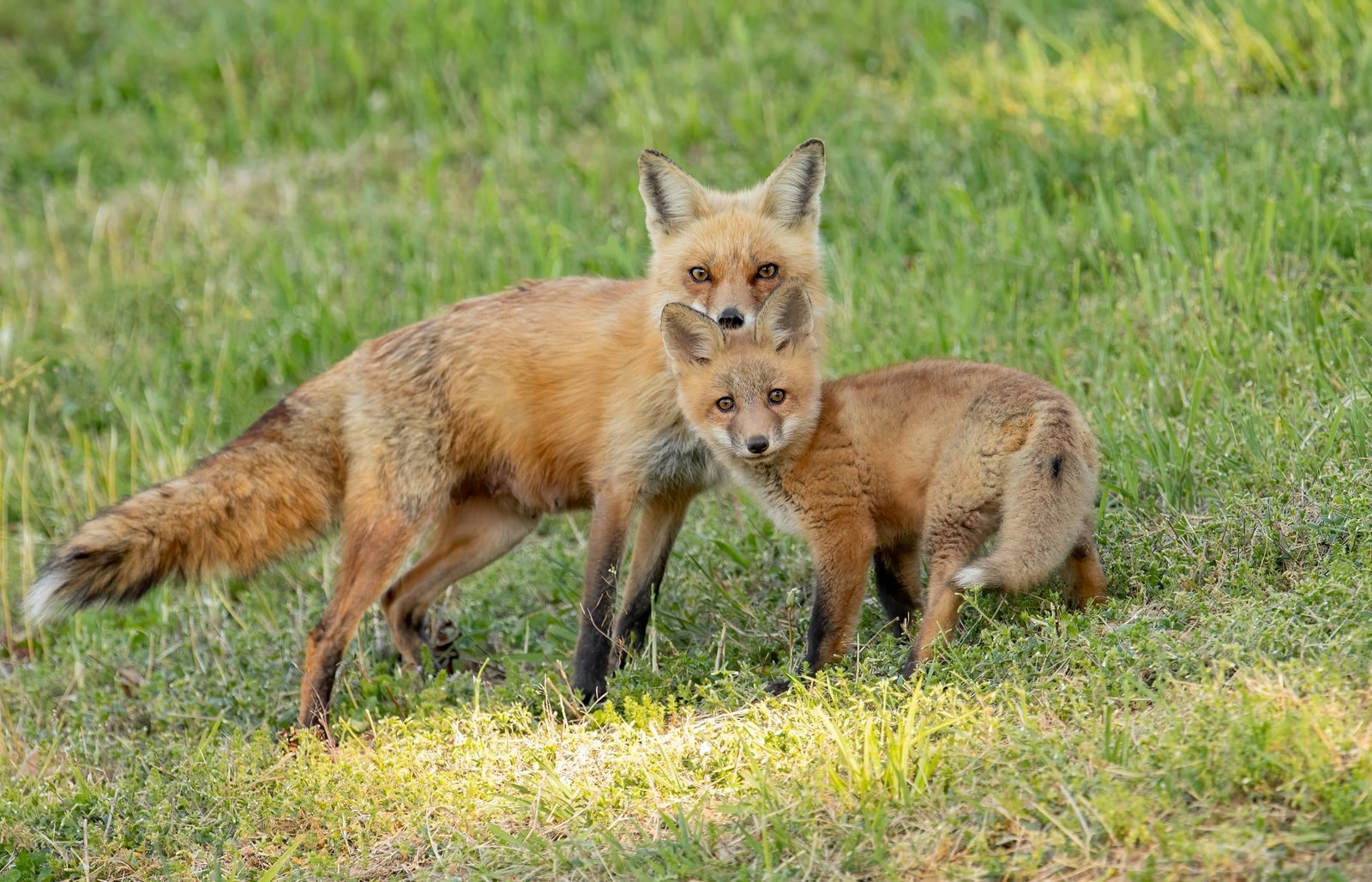
Red fox
- Usually 8–15 pounds
- Red-orange coat with black legs
- Bushy tail with a white tip
- Slender body and prominent ears
Gray fox
- Usually about 5½–9 pounds
- Salt-and-pepper gray back with rusty sides
- Black stripe and black tip on tail
- Exceptional tree-climbing ability
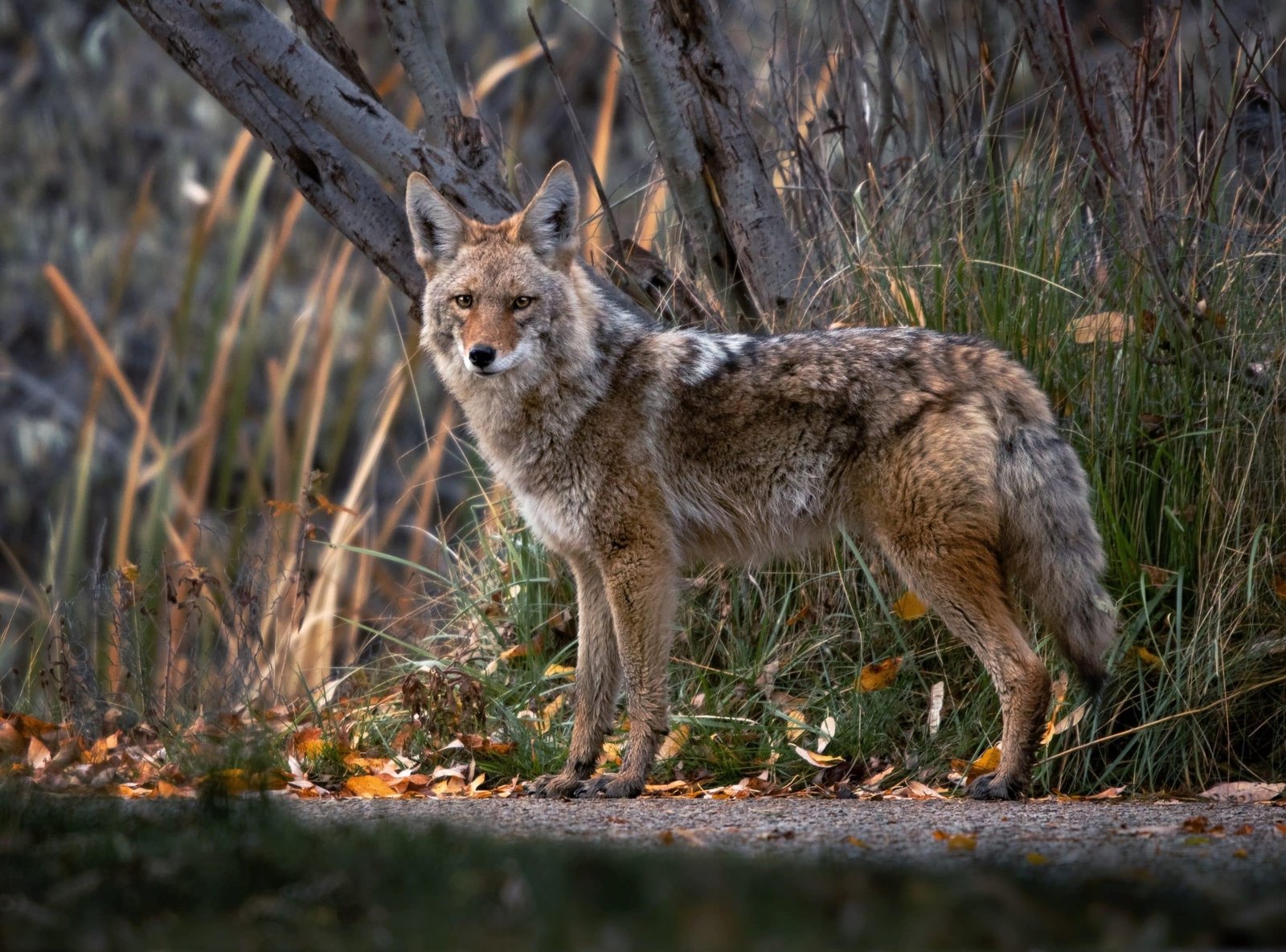
Adaptable across rural and urban Illinois
Coyotes are found statewide in prairies, woodlands, farm country, suburbs, and cities. They are larger than foxes but smaller and more lightly built than most people imagine when picturing a wolf.
Their diet includes mice, voles, rabbits, carrion, fruit, insects, birds, and other available foods. Urban coyotes often shift more activity to nighttime, though daylight sightings can be normal.
Family life
Mating commonly occurs in February, with pups born in spring. A typical litter may contain six or seven pups. Adults can strongly defend a den area, especially when people or dogs pass nearby.
The familiar fox of fields and suburbs
Red foxes occur statewide in grasslands, field edges, brushy areas, bottomland woods, and residential settings. Their white-tipped tail is one of the quickest identification clues.
They eat rodents, rabbits, birds, insects, frogs, carrion, fruit, berries, and other seasonal foods. Foxes help control small-mammal populations and may use suburban areas partly to avoid competition with coyotes.
Denning season
Red foxes mate in winter and usually give birth in March or April. Families use underground dens, including sites beneath porches, decks, sheds, and other quiet structures.
Illinois’ tree-climbing fox
Gray foxes occur in wooded and brushy habitat. Unlike coyotes and red foxes, they are powerful climbers and may rest or escape danger in trees. Their tail has a dark stripe down the top and ends in black rather than white.
Diet
Gray foxes eat fruits, nuts, corn, insects, birds, mice, rabbits, roots, and other foods available in wooded-edge habitat.
Conservation note
Illinois has imposed additional restrictions on gray fox harvest because of population concerns. Correct identification is essential before any removal decision.
Clues left around a property
Tracks
Canid tracks usually show four toes, claw marks, and a triangular heel pad. Coyote tracks are generally larger and more elongated than fox tracks.
Scat
Fox and coyote scat may contain fur, bone, seeds, or insect fragments. It is often placed along trails or on prominent objects as a territorial marker.
Dens and trails
Repeated travel paths, digging, multiple entrances, food remains, and adults carrying prey can help reveal an active family site.
Normal sightings versus concerning behavior
Usually normal
- Crossing a yard or road and continuing onward
- Moving at dawn, dusk, nighttime, or occasionally daytime
- Avoiding people when noticed
- Hunting rodents in open areas
Worth reporting or evaluating
- Repeated approaches toward people or pets
- Attacks on poultry, livestock, or domestic animals
- Staggering, severe hair loss, confusion, or inability to move normally
- Animals being intentionally fed or losing their normal wariness
What to do when you see one
Do not run
Stay calm, face the animal, stand tall, make noise, and slowly create distance. Running can encourage pursuit.
Control pets
Keep dogs close and cats indoors. Small pets should not be left outside unattended, particularly at night.
Never feed them
Intentional feeding and accessible pet food, trash, compost, or bird-seed prey can encourage repeated visits and reduced wariness.
Illinois references: IDNR coyote, IDNR red fox, IDNR gray fox, and Wildlife Illinois coyote guidance.
Need help evaluating repeated canid activity?
D&K can inspect the site, identify the responsible species, and recommend practical, lawful next steps for a documented fox or coyote conflict.