
ILLINOIS PEST IDENTIFICATION GUIDE
Millipedes of Illinois
Millipedes are slow-moving decomposers with rounded segmented bodies and many short legs. They live in damp soil and decaying vegetation but sometimes migrate into Illinois homes in large numbers.
This guide covers identification, diet, habitat, life cycle, seasonal movement, risks and the difference between millipedes and centipedes.
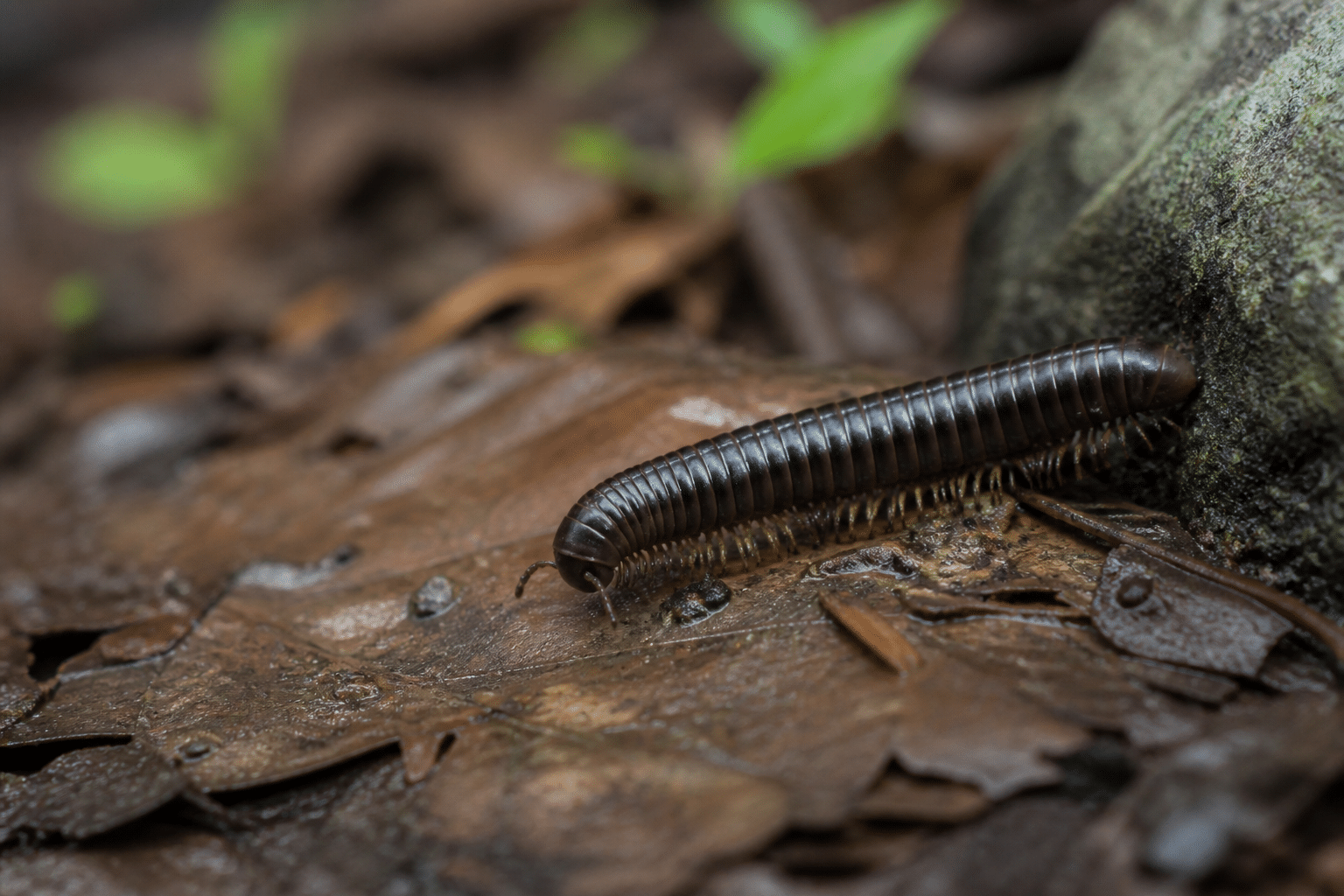
How to Identify a Millipede
- Long, rounded or slightly flattened segmented body
- Most visible body segments carry two pairs of short legs
- Usually dark brown, black or reddish brown
- Slow, steady movement rather than rapid running
- Often curls into a tight coil when disturbed
Despite the name, millipedes do not have one thousand legs. The number varies by species and increases as young millipedes add segments while growing.
Millipede Habitat and Diet
Millipedes require moisture and are commonly found beneath leaves, mulch, logs, stones and other ground cover. They feed primarily on decaying leaves, wood and plant debris, helping recycle nutrients into the soil.
They are most active at night or during cool, damp weather. Dry conditions force them deeper into soil or toward other protected moisture.
Millipede Life Cycle
Females place eggs in moist soil. Young millipedes hatch with relatively few body segments and legs, then gain additional segments through successive molts.
Development may take more than one year, and adults of many species can live for several years in favorable outdoor habitat.
Millipedes vs. Centipedes
Millipedes
- Two pairs of legs on most body segments
- Rounded body and short legs
- Slow decomposers of plant material
- Curl into a coil when threatened
Centipedes
- One pair of legs per body segment
- Flattened body with legs extending sideways
- Fast predators of other small animals
- Run or hide when disturbed
Why Millipedes Invade Homes
Heavy rain can flood millipedes from soil, while drought can force them to search for moisture. Seasonal population growth also produces large migrations across patios, foundations and lower-level entries.
They commonly enter beneath doors, through foundation cracks and around basement or garage openings, but rarely survive long indoors.
Are Millipedes Harmful?
Millipedes do not bite, sting, spread disease or damage structural wood. Most are beneficial decomposers outdoors.
Some species release defensive chemicals that smell unpleasant and may irritate skin or eyes. Avoid rubbing your eyes after handling one, and use gloves or a vacuum for indoor removal.
Frequently Asked Questions
Why do millipedes curl up?
Can millipedes damage my plants?
Why do I find dead millipedes indoors?
Seeing seasonal millipede invasions? Visit our Millipede Control Services page.