
Muskrat Trapping & Removal Services
Muskrats can tunnel into private pond banks, dams, and embankments. D&K identifies active areas, sets targeted trapping equipment, removes muskrats, and monitors the site to help reduce continued burrowing pressure.
Burrowing damage can become a serious pond problem
Muskrat entrances are commonly at or below the waterline. From there, tunnels can extend into an embankment and create hidden voids. Saturated soil, erosion, and repeated burrowing can weaken pond banks and contribute to settlement, washouts, or leaks.
Bank burrows
Openings near the waterline and worn slides can indicate muskrats are entering a shoreline den.
Soft or settling soil
Hollow areas may not be obvious until the surface begins to sink or collapse under pressure.
Clipped vegetation
Cut aquatic plants, feeding platforms, tracks, and droppings help confirm activity around the pond.
Focused trapping and removal—not exclusion
Inspect the shoreline
We look for active burrows, slides, feeding sign, travel routes, and the portions of the embankment receiving the most pressure.
Place targeted equipment
Traps are positioned according to current muskrat movement and site conditions rather than simply being scattered around the property.
Monitor and remove
We check results, adjust placement when activity changes, and continue the removal plan according to the agreed service scope.
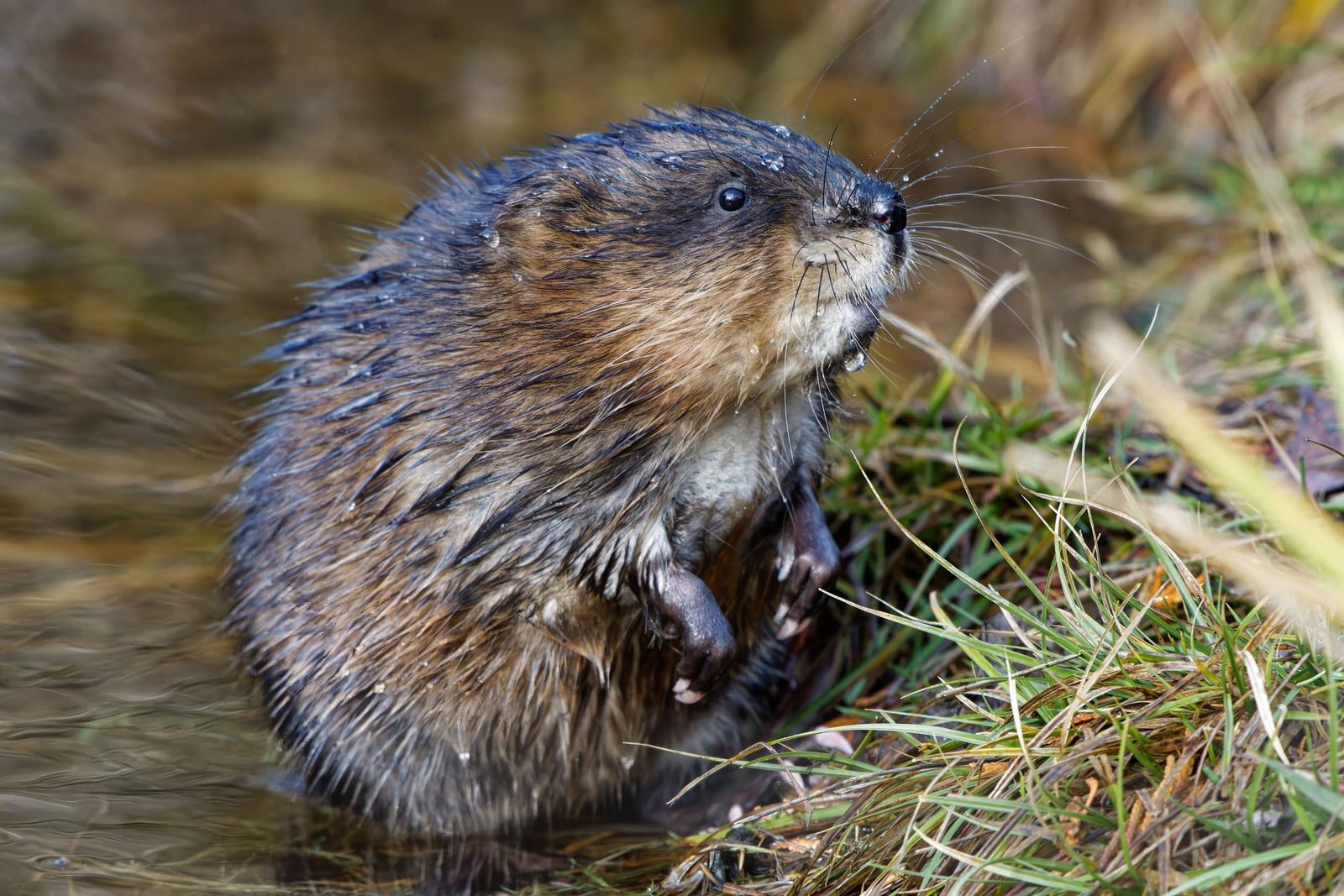
Address fresh activity before damage expands
Muskrats can reuse productive den sites, and more than one animal may occupy the same bank system. Fresh slides, newly clipped vegetation, muddy water at an entrance, or recently disturbed soil can indicate current use.
Removal addresses the animals causing the active pressure. Pond-bank restoration, leak repair, and structural evaluation are separate from trapping and may require an experienced pond contractor or engineer—especially when a dam is settling, leaking, or visibly compromised.
A practical approach to changing wildlife activity
Inspection-led placement
Water levels, vegetation, shoreline construction, and den locations vary from pond to pond. The service plan is based on what is active at your property.
Ongoing observation
After removal, watch for fresh slides, new openings, disturbed soil, or renewed clipping so returning activity can be identified early.
No structural-exclusion promise
Muskrat control is not handled like attic wildlife exclusion. The focus is population removal and abatement around the waterbody.
Private-property service
We focus on muskrat problems affecting private ponds and their shorelines, banks, dams, and maintained embankments.
Muskrat removal questions
How do I know the damage is from a muskrat?
Bank openings near the waterline, narrow slides, clipped aquatic plants, and a laterally flattened tail are useful clues. An inspection helps distinguish muskrats from beavers, mink, and other pond wildlife.
Will trapping repair the pond bank?
No. Trapping removes the animals responsible for active pressure. Existing voids, erosion, leakage, or structural damage may need separate repair.
Can one muskrat make several entrances?
Yes. A shoreline may contain multiple openings and travel routes, and several muskrats can sometimes use the same den system.
Do you install exclusion around ponds?
No. For muskrats, our work is centered on trapping, removal, and abatement rather than structural exclusion.
Concerned about a private pond embankment?
Schedule an inspection so we can look for active muskrat sign and recommend a targeted trapping and removal plan.