Table Of Contents
- Why Trapping Isn’t Always the Best Solution
- What Is Humane Wildlife Eviction?
- What Is Wildlife Exclusion?
- When Is Trapping Still Necessary?
- Common Wildlife We Remove
- Frequently Asked Questions
Humane Wildlife Removal vs. Trapping: Why Wildlife Eviction and Exclusion Are the Best Long-Term Solution
When homeowners discover wildlife living in their attic, soffits, walls, or crawl space, the first question is usually:
“Can you just trap it?”
For decades, trapping has been the most common answer to nuisance wildlife problems. While trapping still has an important place in professional wildlife management, it isn’t always the best solution.
Modern wildlife control has evolved. Today, many wildlife professionals focus on humane wildlife eviction, one-way door systems, and professional wildlife exclusion because these methods often provide a safer, more humane, and longer-lasting solution.
At D&K Pest Control, we believe wildlife removal shouldn’t end when the animal leaves. The goal is to solve the reason the animal entered your home in the first place.
Why Animals Choose Your Home
Wildlife isn’t trying to invade your home.
They’re simply looking for the same things every living creature needs:
- Shelter
- Warmth
- Protection from predators
- A safe place to raise young
Your attic, soffits, walls, crawl space, or chimney provide exactly that.
Common entry points include:
- Damaged roof vents
- Ridge vents
- Open soffit returns
- Loose fascia
- Gaps beneath siding
- Chimneys
- Construction gaps around the foundation
- Utility penetrations
Once one animal finds a safe place to live, the scent left behind often attracts future animals if those openings remain.
Removing the animal without repairing the structure often means the next homeowner call is only a matter of time.
Why Trapping Alone Doesn't Always Solve the Problem
Traditional trapping has been the standard in the wildlife industry for decades. An animal enters a home, traps are set, the animal is removed, and the job is finished.
Unfortunately, that’s often where the problem begins.
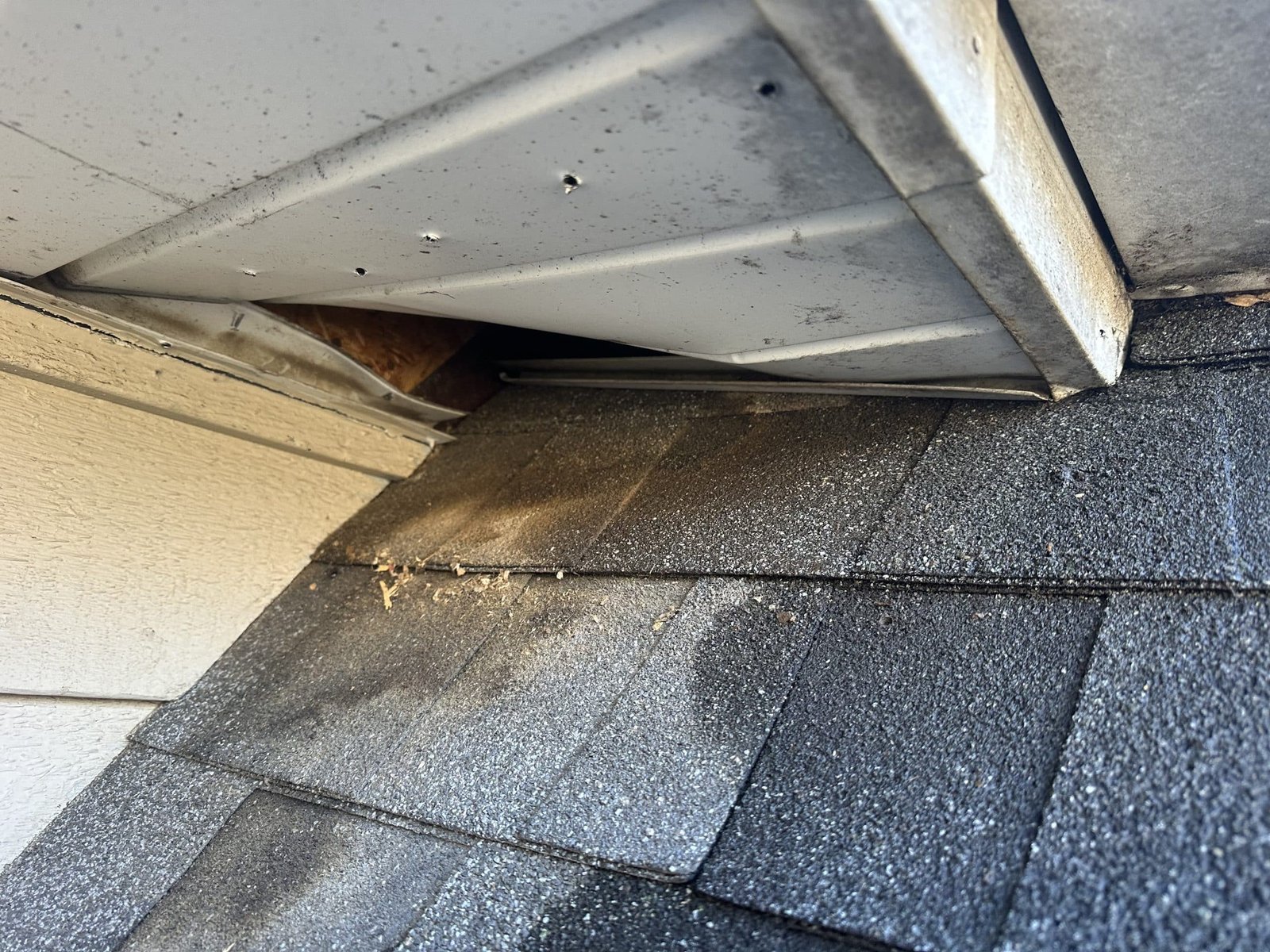
Wildlife doesn’t enter homes by accident. Raccoons, squirrels, birds, bats, and rodents are taking advantage of an existing vulnerability in the structure. That could be:
- An open soffit return
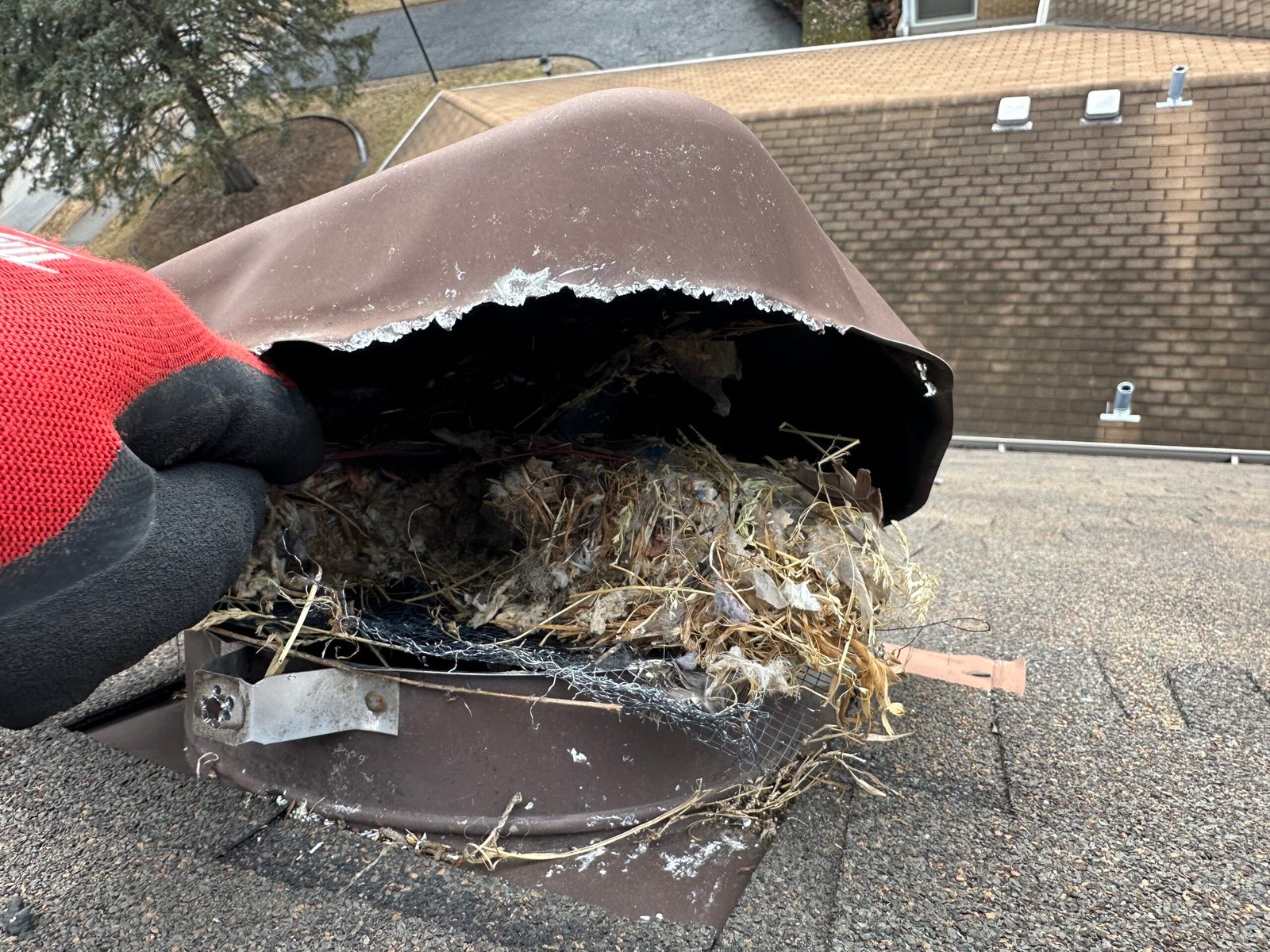
- A damaged roof vent
- A loose piece of fascia
- An uncapped chimney
- A gap beneath siding
- A deteriorated ridge vent
If those openings remain, another animal will eventually discover them.
Removing one raccoon doesn’t prevent the next raccoon from moving in.
Removing one squirrel doesn’t stop another squirrel from using the same opening.
The entry point is the real problem.
What Is Humane Wildlife Eviction?
Humane wildlife eviction removes animals by allowing them to leave naturally while preventing them from returning.
Instead of immediately placing traps, technicians evaluate:
- The species involved
- Whether babies are present
- The season
- The construction of the home
- Safety concerns
- Illinois wildlife regulations
Depending on the situation, humane removal may involve:
One-Way Doors
One-way doors allow wildlife to leave but prevent them from getting back inside.
Once technicians confirm the structure is vacant, permanent repairs can begin.
Hand Removal & Family Reunification
During baby season, mothers often leave temporarily to search for food.
If young are found, technicians can carefully remove them and place them into a protected reunification box near the original entry point.
The mother retrieves them naturally and relocates the family.
This avoids unnecessary orphaning while allowing repairs to be completed.
Live Trapping When Appropriate
Some situations still require trapping.
Professional wildlife removal isn’t about avoiding traps.
It’s about using the right tool for each situation.
What Is Wildlife Exclusion?
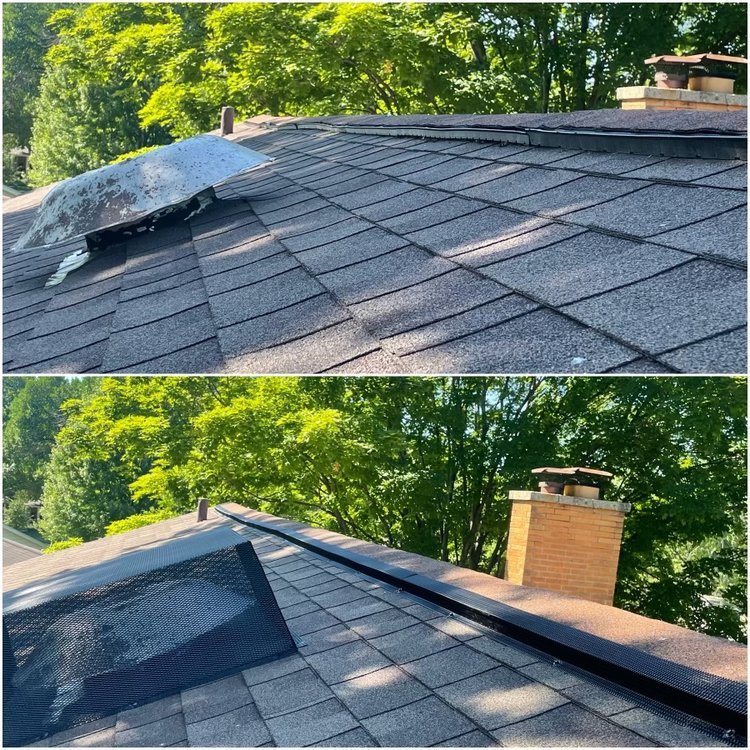
Wildlife exclusion is the process of preventing animals from entering a structure.
This is where permanent protection begins.
Professional exclusion may include:
- Roof vent protection
- Ridge vent reinforcement
- Soffit repairs
- Fascia repairs
- Chimney caps
- Siding exclusion
- Foundation sealing
- Utility penetration sealing
- Custom wildlife-proofing
These materials are specifically designed to withstand wildlife chewing, weather exposure, and years of use.
Why Wildlife Exclusion Is More Important Than Wildlife Removal
Here’s the reality:
Removing today’s raccoon doesn’t stop tomorrow’s raccoon.
Exclusion does.
That’s why exclusion has become one of the fastest-growing parts of the wildlife industry.
Rather than repeatedly paying for animal removal, homeowners invest in protecting the structure itself.
Benefits include:
- Fewer repeat infestations
- Reduced repair costs
- Better attic protection
- Less insulation damage
- Greater energy efficiency
- Increased home value
- Long-term peace of mind
Wildlife Proofing Is What Solves the Problem
The most important part of any wildlife job happens after the animals leave.
Professional wildlife exclusion is the process of identifying and sealing the vulnerable areas wildlife use to enter a structure.
This may include:
- Soffit repairs
- Ridge vent protection
- Roof vent covers
- Fascia repairs
- Siding exclusion
- Foundation sealing
- Chimney protection
- Crawl space repairs
These aren’t temporary patches.
They’re permanent improvements designed to help keep wildlife outside where it belongs.
Common Wildlife Problems We Solve
Raccoons
Raccoons commonly enter through roof returns, soffits, roof vents, and construction gaps.
Rather than relying solely on trapping, we often use one-way doors, reunification methods when appropriate, and permanent exclusion to keep future raccoons out.
Squirrels
Squirrels chew surprisingly small openings and quickly enlarge weak areas.
After humane removal, we reinforce vulnerable locations with professional wildlife exclusion materials designed to withstand chewing.
Birds
Birds frequently nest inside bathroom exhaust vents, dryer vents, and roof vents.
Removing the nest without installing proper vent protection often leads to another nest the following season.
Bats
Bat removal requires careful planning and must follow Illinois seasonal regulations.
Professional bat exclusion allows bats to leave safely while preventing them from returning.
Rodents
Mice and rats often enter through gaps around siding, foundations, garage doors, utility lines, and roof intersections.
Long-term rodent control combines trapping or baiting with complete rodent exclusion whenever possible.
Skunks
Skunks commonly den beneath porches, decks, sheds, and concrete stoops. Whenever possible, we use humane eviction methods combined with professional wildlife exclusion to safely remove skunks and help prevent future animals from returning.
Is Trapping Ever Necessary?
Absolutely.
There are situations where trapping is still the safest or most effective option.
These may include:
- Animals that cannot be safely evicted
- Situations involving injured wildlife
- Certain species that require trapping under Illinois regulations
- Properties where exclusion cannot be performed immediately
- Animals that refuse to leave after appropriate eviction efforts
Trapping remains an important tool.
It simply isn’t the only tool.
Every wildlife situation is different, which is why every inspection begins with determining the most appropriate removal method.
What About Baby Animals?
One of the biggest concerns during spring and early summer is the presence of young animals.
Mother raccoons, squirrels, birds, and other wildlife often give birth inside attics because they’re warm, dry, and protected from predators.
Simply trapping the mother can leave babies stranded inside the home.
Whenever possible, we use humane removal methods that allow families to stay together.
Depending on the situation, this may include carefully removing the young by hand and placing them into a protected reunification box outside the entry point. The mother then relocates her young naturally after the home has been secured.
This approach is not only more humane but often results in a faster and more complete removal.
The D&K Pest Control and Wildlife Removal Difference
At D&K Pest Control, we don’t believe wildlife removal ends when the animal leaves.
Every inspection focuses on understanding how wildlife entered, why it chose your home, and what can be done to prevent future problems.
Our process may include:
- Thorough wildlife inspections
- Humane wildlife eviction
- One-way door systems
- Hand removal and reunification of young
- Live trapping when necessary
- Professional wildlife exclusion
- Structural repairs
- Attic cleanup and restoration
- Long-term wildlife prevention
Because solving the problem today is good.
Helping ensure it doesn’t happen again is even better.
Why Homeowners Are Choosing Wildlife Exclusion
More homeowners are realizing that wildlife removal isn’t just about getting today’s animal out.
It’s about protecting the home from tomorrow’s animal.
Professional wildlife exclusion provides benefits such as:
- Fewer repeat wildlife problems
- Long-term protection
- Reduced property damage
- Better energy efficiency by sealing gaps
- Greater peace of mind
- Increased home value through structural repairs
Instead of paying to remove wildlife every few years, many homeowners choose to invest in permanently protecting their homes.
Humane Wildlife Removal That Lasts
At D&K Pest Control, we believe wildlife belongs in nature, not inside your home.
That’s why we focus on humane wildlife removal combined with professional wildlife exclusion and structural repairs. By addressing both the animal and the reason it entered, we help homeowners avoid repeat infestations while protecting both their property and the wildlife involved.
If you’re dealing with raccoons, squirrels, bats, birds, rodents, or other nuisance wildlife, our experienced team can inspect your home, recommend the most effective solution, and provide long-term protection backed by professional craftsmanship.
Frequently Asked Questions
Is trapping always the best way to remove wildlife?
No. While trapping is appropriate in some situations, many wildlife problems can be resolved through humane eviction and professional exclusion, which address both the animal and the entry point.
What is a one-way door?
A one-way door allows wildlife to leave a structure but prevents it from re-entering. Once technicians confirm all animals have exited, the opening is permanently sealed.
What is wildlife exclusion?
Wildlife exclusion is the process of sealing entry points and reinforcing vulnerable areas of a home to help prevent future wildlife infestations.
Is humane wildlife removal more effective?
In many cases, yes. Humane wildlife eviction combined with exclusion addresses the root cause of the problem rather than simply removing the current animal.
Do you still use traps?
Yes. Trapping remains an important part of professional wildlife management and is used whenever it is the safest or most effective solution for the situation.
Written by Kyle Kilgore
Kyle is the co-owner of D&K Pest Control and Wildlife Removal. He specializes in humane wildlife removal, wildlife exclusion, and structural wildlife-proofing throughout Naperville and the western Chicago suburbs. His team performs hundreds of wildlife inspections each year involving raccoons, squirrels, bats, birds, skunks, rodents, and other nuisance wildlife.